Monday, September 09, 2013

So what happens after the second and third major uses of chemical weapons by Assad?

UPDATE:  I agree with Josh Marshall that turning over the chemical weapons for destruction is fine as an alternative, and IMO much better than a strike. If Assad only plays along for a while and then refuses, we could reassess whether to strike then or wait for him to use them again.


I'm glad that Obama is going to Congress, and he obviously shouldn't move ahead if Congress doesn't pass the resolution. The US moves too slowly on domestic matters. We have at times like World War II, Libya, and Syria itself, also moved too slowly on military involvement overseas. The more typical pattern though is for military involvement happening too quickly and on false pretenses. Getting Congress involved is a good idea in the long run, even if it results this time around in the mistake of tying Obama's hands. Waiting so that we can go from 97% sure of what happened to 99%+ sure is also a good idea.

Lots of stupid arguments being made on both sides. The antis say that anything short of overthrowing Assad is a failure as a deterrent and that a military strike will harm domestic programs at home. The pros say that failure to strike puts the US in immediate danger, and continue with the old chestnut of conflating chemical weapons with nuclear weapons as "weapons of mass destruction." The antis make sadly laughable claims that diplomacy is going to do anything about chemical weapons or about the problems in the Syrian opposition (Rep. Chris Smith says a military strike won't deter Assad but Smith's proposal to eventually set up a war crimes tribunal may help). I heard another Republican Congressman criticize Obama for not attacking when the previous, ambiguous chemical weapons uses occurred, and then say he'd vote against authorization.

The key issue is that the chemical weapons use and what to do about Syria overall are separate issues, despite the desire of extremists like McCain to tie them together. Obama seems to understand that. A reaction by the US and France to the chemical weapons use, either a military or non-military reaction, would succeed if it leaves Syrian decisionmakers thinking that doing it again would not be in their best interest (or if it really was just a mistake, then realize they had to get their system under control). I just can't think of a non-military reaction that has that effect.

I think it's not ridiculous to argue that the outside world should do nothing (sorry, do diplomacy only) after further chemical weapons attacks - we can't solve all the world's problems - but I think on balance it's a bad argument. I'm guessing that if the authorization goes down, Obama will just wait for further attacks, and then most likely strike without asking Congress (even though he should ask Congress).

Yes, the US is being hugely hypocritical in opposing Assad while doing nothing elsewhere, like Bahrain. That's not a reason to do nothing but instead a reason to fix our act in Bahrain.

For those who think the current bad news in Libya proves our involvement there was a mistake, my bet offer is still open, and updated.

Sunday, September 08, 2013

Water


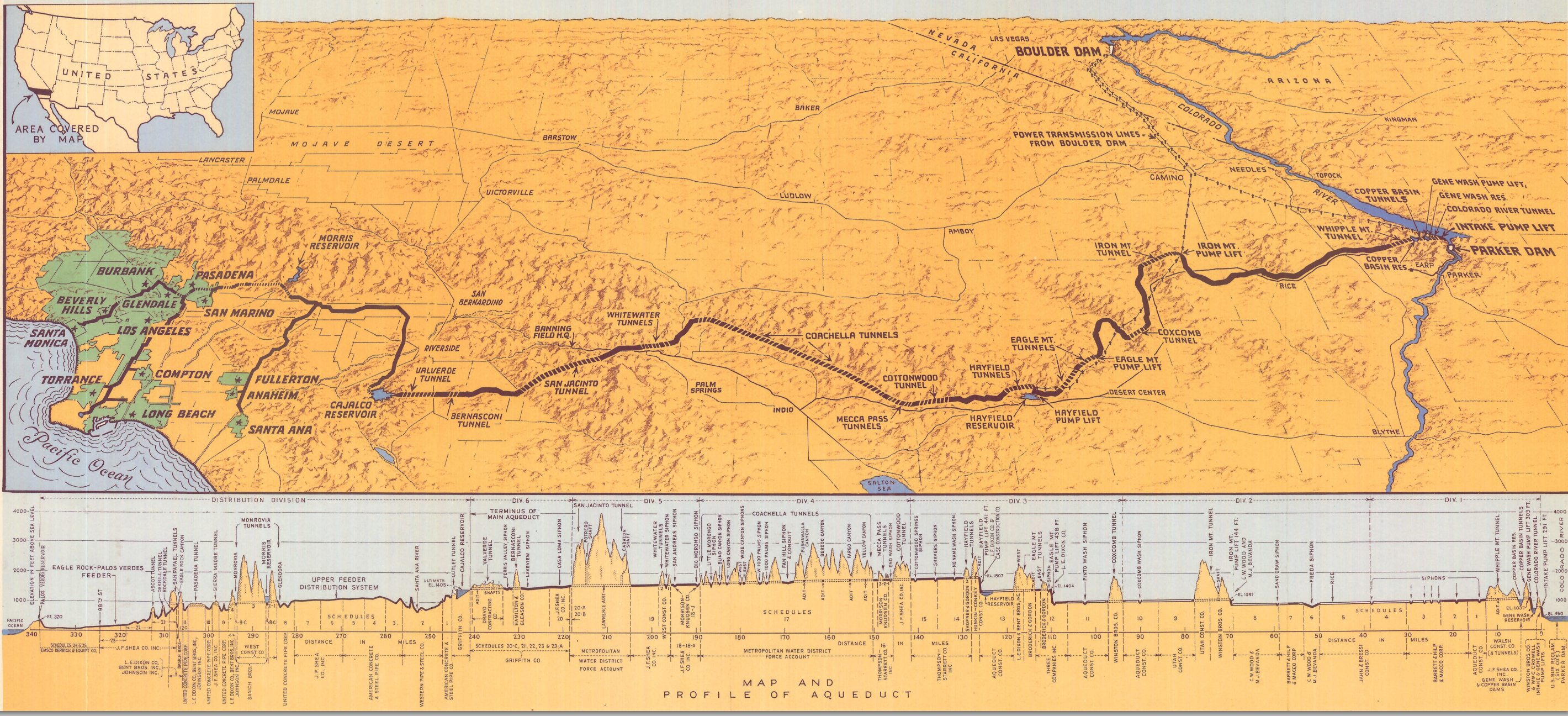
Eli of course, admires Ed Darrell.  So when Ed "borrows" from Eli that is a lesson.  John Fleck dug up a stunning graphic of the LA water aqueduct from the Colorado River., and who is Eli not to take advantage.  Besides, John has not exactly been a buddy.  It's open season bunnies.

More on plug-in v gas engine infrastructure

My post in August suggested that as plug-in hybrid and EV sales rise to several percentage points and more of market share, we'll start to see incremental degradation of the societal infrastructure supporting gas engines, mainly a loss of gas stations and car maintenance shops. I argued that range anxiety and "range irritation" will be an issue for gas engine vehicles in some urban areas within a decade or so.

Some pushback happened in comments over whether gas engine range anxiety will really be an issue and when it might occur. James Wimberley correctly points out that the current average age of vehicles is 11 years for a lifespan of 20 years, not 10 years as I said. Wiki says that's an increase from 9.4 year average in 2007 which suggests it may lower some as the economy improves. More importantly, wiki says "many Americans own three or more vehicles. The low marginal cost of registering and insuring additional older vehicles means many vehicles that are rarely used are still given full weight in the statistics." What we care about is more likely to be the median age of the vehicle that gets median usage. Still, I agree that it will take more than five years for that median vehicle to reflect current year market share.

On range anxiety, I did some unscientific (yes I know) checking around on Google Maps of two areas I know pretty well - South San Francisco Bay area and upstate New York. You have to get out to the more distant suburbs before gas station density really starts dropping and range anxiety seems more likely. In the exurbs, you usually travel on arterials where the gas stations are located, and people choosing to live in exurbs tend to accept lots of driving as part of the tradeoffs they're making.

Still, not every trip in exurbia is a long one that will pass by a convenient gas station. And while other people may be perfect, I certainly have let the gas tank get low enough to be more than a little anxious, even in the more urban-ish area where I live. Any decrease in gas station density could intensify that.

I had previously suggested a five mile trip just to get gas as problematic, but there's nothing magical about that number. While gas engine range irritation is probably more important, I still think range anxiety complaints will happen somewhere within a decade.

Range irritation, which I'd define as annoyance at the time spent filling up and maintaining gas engine vehicles, is the main issue. Driving even a quarter mile in heavy traffic can take time and that will get worse as station density decreases/population density increases. Drivers can plan their gas trips to avoid busy traffic, but that puts them in the same planning constraint situation that EV drivers face. When plug-ins can charge both at home and wherever they normally drive to, they're the more convenient vehicle.

In related news, plug-ins captured 6% of the August market share in Norway, presumably even more than that in Oslo. Significant financial incentives in Norway balance out the negative externalities from gas engines. Maybe Oslo will be the first place where the infrastructure favors plug-ins over gas.

In less cheerful news, Australian voters look likely to have scrapped their carbon tax on the most polluting businesses. Instead they'll have taxpayer tributes to the same businesses in return for reducing the harm they're causing to Australia and the world. While this was likely a secondary issue in the election, I think it does indicate the reason why it's helpful to make political compromises in order to get broader support for climate solutions.

Albert Speer's memoirs on Nazis rejecting gas warfare

Recently finished Speer's memoir, Inside the Third Reich. I'll have my own comments on the chemical weapons issue, but in case they're useless, I'll separate out a piece of history from late 1944 (at pp. 413-414 of the paperback):
Hitler, to be sure, had always rejected gas warfare; but now he hinted at a situation conference in headquarters that the use of gas might stop the advance of the Soviet troops. He went on with vague speculations that the West would accept gas warfare against the East because at this stage of the war the British and American governments had an interest in stopping the Russian advance. When no one at the situation conference spoke up in agreement, Hitler did not return to the subject. 
Undoubtedly the generals feared the unpredictable consequences.

Hitler, btw, had been temporarily blinded in World War I from a British gas attack.

Cultural cognition model versus "powerful groups are lying" model

Fair amount of Twitter discussion of a Dan Kahan paper setting up a lab battle between information deficit as explaining people's policy misunderstandings (Science Comprehension Thesis or "SCT") versus a psychological reaction to facts that conflict or confirm with personal and group ideology (Identity-protective Cognition Thesis or "ICT"). Kahan et al. found that people with better numerical ability applied that ability when the conclusions favored their ideology and sometimes didn't when the conclusions were problematic for them. This has the effect of increasing political polarization for people with higher numerical ability, which he says shows ICT as better explaining the effect than SCT. Chris Mooney has a decent writeup here.

With that throat-clearing done, the main issue is what Steve Bloom and Michael Mann said, in effect that the Powerful Groups Are Lying (PGAL) model better explains why the public has problems accepting climate science. Some organizations and people are lying and acting in bad faith, feeding into and creating the cultural identity that Kahan researches. My own suspicion that climate deniers are cozying up to evolution deniers is a conscious effort to snuff the Creation Care evangelical movement and preserve a conservative religious group identity, so this identity that Kahan talks about isn't a fixed thing - it's manipulated.

Secondary to all that, Mooney overplays it when he asks whether the Kahan paper will "slay the 'deficit model' once and for all." The study showed that highly numerate people were better than innumerate ones at understanding a problem, even when that understanding conflicted with their group identity. In the paper, Kahan says (p. 25):

ICT predicts that more numerate individuals will use that ability opportunistically in a manner geared to promoting their interest in forming and persisting in identity-protective beliefs.
The results in the experiment suggest that high-Numeracy partisans did exactly that in the gun-ban conditions. 
That seems to be either wrong or sloppy writing because the highly numerate people did better despite the group identity cost, presumably by using their better skills. The general argument in the paper is fine that polarization increases - both groups do better at high numeracy but one will do far better than the other when it reinforces their identity. If both improve then the deficit model isn't slain.

Mapping this directly to climate change, it suggests that both reasonably-educated conservatives and liberals will benefit from more science education on climate, although it will penetrate better with liberals. The real need, though, is for the PGAL effort to stop manipulating group identity and force-feeding disinformation.

Kahan's right though when he says "people, once predisposed, misinform themselves, summoning all their reason." That may be a common flaw, but it's still a moral flaw. The disinformers who feed this weakness are the crack dealers of politics.

I should also say not all the deniers know they're lying, and from my conversations with some of them I'm sure they believe what they're saying. Others though are a different story.

Friday, September 06, 2013

Weekend Frights, Boogie Nights


Oh, all right Russell, anyone who wants can view the video here Auto play is hard to stop sometime.

Wednesday, September 04, 2013

WTF, Let's Vote

In an ueber weird commercial the German Metalworkers Union puts up on YouTube what may be the single greatest get out the vote ad ever


A rough transcript of the text to juice up the Aussies out there who also have an election coming up, even though they have to vote.

0:05   Germany chills out
0:13   All the important stuff in 2013 has been decided
0:30   Really, already decided?
0:48   On September 22 the cards will be mixed again
0:51   (Merkel)  This government has been the most successful in Germany since the reunification . .
0:57    (Steinbrueck SDP)  This government thinks that they can slide through . .
1:00    (FDP = libertarians) Only one thing can beat the, the FDP itself
1:04    National election 2013
1:07    Problems there are aplenty
1:12    No joy from a lousy job?
1:16    Too few nursery places?  R. Tol appears
1:23    Rather retire earlier?
1:29    Better education?
1:36    Equality?
1:38    It's not so easy, first you have one house, and then another
1:40    You can never have enough
14:2    Right now we have an asocial market economy, not a social one
1:46    You have a voice, use it
1:56    September 22 is the election
2:01   It's close
2:07   It's difficult
2:11   It's gonna be dirty
2:17   Unexpected coalitions will emerge
2:25   It's time to beat on the table
2:32   Push!
2:39   Onwards to the election!
2:46   Vote!!
2:51   So, let's discuss this a bit further

Tuesday, September 03, 2013

Richard Tol Calls Richard Tol's 122 Papers Irrelevant


As the bunnies may recall, Richard Tol was inconsolable that the Cook et al. survey only included ten of his 122 papers

Cook survey included 10 of my 122 eligible papers. 5/10 were rated incorrectly. 4/5 were rated as endorse rather than neutral: 

Eli was very hard on Poor Richard, but the Rabett is happy to learn that Richard really didn't think that any of his papers should be included. Over at Joanne Nova's he says he was only kidding
Richard Tol  August 28, 2013 at 4:06 pm · Reply
You omit the commonest error. Most papers on climate change do not explicitly test the hypothesis of human-made climate change. Only a few hundred papers do that. Most papers are about impacts of climate change, or climate policy, or a particular feature of atmospheric physics, or … Many of these paper do contain some words on human-made climate change in the abstract, and were thus counted as endorsements.
Of course, that means that by picking up only a few of Mike Mann's papers, Cook et al. made a huge mistake.  Might have been 98%

BTW that is Richard's Twitter icon.  Hmm.

Monday, September 02, 2013

Revellation

There have been a number of recent interesting posts and papers on what has loosely been gathered under the rubric of ocean acidification.  The ocean acidification tent covers a number of interconnected issues which are often not explicitly dealt with.  Before sending the bunnies off into the fields, Eli thought a brief discussion would be useful.

A good beginning takes Rabett Run back to Revelle and Suess's observation that there is only so much CO2 that you can shove into the oceans.  This is usefully described by the Revelle factor

R = ∂ln[CO2(aq)]/∂ln[DIC(aq)]
where [CO2] is the concentration of dissolved carbon dioxide and [DIC] is the concentration of dissolved inorganic carbon
[DIC] = [CO2(aq)]+ [HCO3-] + [CO32-]
The square brackets [] stand for concentration and (aq) labels the state of the species.   

DIC is the carbon tied up in the equilibria between CO2 and water. 
(1)  CO2(g) = CO2(aq)
which represents the solution into and bubbling out of CO2 from the water.   The aqueous CO2 can react with the water to form hydrogen carbonate (formerly called bicarbonate) ions, HCO3-
(2)  CO2(aq)+ H2O = HCO3-(aq) + H+(aq)
and finally the hydrogen carbonate can free up another H+ increasing the acidity
(3) HCO3-(aq) = H+(aq) + CO32-(aq)
and that is what happens if you start with a glass of distilled water.  After a while it becomes acidic.  That is not what happens in the oceans, and the reason is that there are other sources of carbonate ions, CO32-, for example dissolution of limestone or shells which are mostly calcium carbonate
(4) CaCO3(s) = Ca2-(aq) + CO32-(aq)
where the calcium carbonate, CaCO3(s), is a solid.  Because there is a lot of limestone, other carbonates and shells in the oceans there is a lot of CO32- around.   For what follows it would be clearer if we inverted (3)
(-3) H+(aq) + CO32-(aq) =  HCO3-(aq)
(2)  CO2(aq)+ H2O = HCO3-(aq) + H+(aq)<
Comparing 2 and (-3) shows that hydrogen ions (aka protons, think about it Bohr fans) produced in (2) are consumed in (-3).  If we add them up
(5) H2O + CO2(aq) + CO32-(aq) = 2 HCO3-(aq)
The balance is not perfect but equation (5) expresses how the carbonate concentration of the oceans buffers changes in acidity (expressed as pH = - log10[H]+(aq)], much of the excess hydrogen ions produced in the forward reaction (2) are consumed in the reverse reaction (-3).  The excess increases the concentration of hydrogen ions in the water, decreasing the pH,  pH being a logarithmic scale, the observed change.  Thus the oceans will become more acid, e.g. the pH will decrease.  The observed decrease in pH is about 0.1 units which corresponds to a 30% decrease. 

But, constant readers know that there is always a but, reaction (-3) or (5) if you wish, chews up carbonate ions and if there are fewer carbonate ions then two things will happen in succession.  First, the carbonate ion concentration will decrease, then, to compensate the decrease more CaCO3(s) will dissolve, or in the case of some shells never form.

If the bunnies start with some distilled water and toss some sea shells or limestone in so that reaction (4) is in equilibrium
(4) CaCO3(s) = Ca2+(aq) + CO32-(aq)
Then, hey you in the back, you took GChem, what happens?  Well there is an equilibrium and we can calculate the concentrations of the calcium and carbonate ions
Ksp = 1 x 10-12 = [Ca2 +(aq)]  [CO32-(aq)]
but because of reaction (5) there is less carbonate ion in solution, the oceans are no longer saturated, it is harder to form shells and some shells may actually dissolve.

That's the basics.

The issues are:

How will the decreasing concentrations of carbonate ions forced by changes in atmospheric carbon dioxide affect shell formation.  The answer is clear.  The ability to form shells will decrease.  Besides the esthetic issue of losing corals, the economic issues of loss of income from fishing, there are system biological issues which are concerning.

Will changes in pH have other biological effects?  This is much less studied at this time.  Pre-normal science as it were with answers very organism and environment dependent.

Will changes in DIC driven by increased atmospheric carbon dioxide affect the buffering capacity of the oceans.  The science says that this will decrease the amount of atmospheric carbon dioxide that can be absorbed.  More about this later.

Will increases in DIC increase growth of sea plants and the fish/shellfish that feed on them?  Probably yes, but not necessarily all good news as it looks like algae mats will do best.

All of these are tied up with changes in temperature, pollution and other downward slope issues.

Some places to get started reading

Brad Plummer at Wonkblog
Nick Stokes at Moyhu
The NAS on what should be studied about ocean acidification and why
Norris et al in Science on what happened way back and what could happen in the future
Wittman and Poerter on the sensitivity of the fish in the sea to ocean acidification (anybunny know of an open source for this)

Friday, August 30, 2013

On Her Way Out the Door, Judge Natalia Combes Green Roasts National Review On Line

A good Labor Day Picnic, Ethon was saying, requires some well done barbecued liver.  Indeed, and thus Rick Piltz brings word of the soon to retire Judge Natalia Combes Green cooking up some slivers of National Review On Line in denying their motion to reconsider (links to all the original documents at RR).  Michael Mann is free to proceed.  Climate Science Watch summarizes the carnage but misses the flaying of lawyers.

This matter is before the Court on Defendants Mark Steyn and National Review, Inc.'s (the "NR Defendants") Motion for Reconsideration of July 19 2013 Order (the "Motion) and the Opposition there to.  Upon consideration, the Motion is denied1

Standard

"A motion for reconsideration, by that designation, is unknown to the Superior Court's Civil Rules.  The term has been used loosely to describe two different kinds of motions . . . brought pursuant to" Rule 59(e) and Rule 60(b). 
The NR Defendants might wish to consider hiring a bunch of lawyers who actually practice in DC Superior Court.  Judge Green goes on to offer a helping hand in a footnote.
1.  The memorandum of points and authorities includes argument in support of the NR Defendant's Motion for Reconsideration as well as the Special Motion to DisPmiss Plaintiff's Amended Complaint pursuant to the District of Columbia's Anti-SLAPP Act and the Motion to Dismiss Plaintiff's Amended Complaint pursuant to DC Super. Ct. R. 12(b)(6).  The Court is unsure whether the NR Defendants intended to combine three motions.  Nonetheless the Civil Rules do not permit parties to combine different motions.  Accordingly, this Order only addresses the Motion for Reconsideration, specifically the NR Defendants' arguments that relate to material mistakes of fact and that the Court's did not specifically address Plaintiff's claim of Intentional Infliction of Emotional Distress.  The case has (now) been transferred to Judge Weisberg presiding in Civil I.  Thu the Court will forward to Judge Weisberg the entire Motion for his consideration of the part of the Motion that address the Motion to Dismiss pursuant to the Anti-SLAPP Act.  The parties may want to consider refilling that motion separately on Judge Weisberg's calendar.  The Court will provide Judge Weisberg with all of the exhibits previously provided to this Court.
Eli speculates that the NR lawyers are a branch of the solicitors office that Lord Monckton consults

Thursday, August 29, 2013

Goin Lord

Eli is a full service bunny, and over at Watt's inquired if the good Lord Moncktonwas interested in some action offered by John Abraham  Twice, maybe even three times, who remembers.   Eli thought that the most likely reaction would be some volume of self righteous spew from the gook Lord and, you know, the Bunny was right on

. . . One Rabett says someone wants to take a bet with me about whether the world will cool by 0.5 K before 2020 is out. However, it was not I but another who forecast that. In an earlier posting I merely reported the forecast, which is one of a growing number that find cooling more likely than warming in the short to medium term. To make any such bet symmetrical, there would be no payout if the temperature fluctuated by less than 0.5 K in either direction by 2020 compared with today. The bedwetters would win if the temperature rose by 0.5 K; the army of light and truth would win if it fell by 0.5 K.
That, as they said is not what Chris said
“Meanwhile, enjoy what warmth you can get. A math geek with a track-record of getting stuff right tells me we are in for 0.5 Cº of global cooling. It could happen in two years, but is very likely by 2020. His prediction is based on the behavior of the most obvious culprit in temperature change here on Earth – the Sun.”
Very much a Chris'  patented non denial denial change the subject in the middle of the thought

But to go on
However, the creature seeking cheap publicity by offering the bet has, I discover, been part of an organized (and probably paid) campaign to prevent skeptics such as me from being allowed to speak at various universities around the world to which we are from time to time invited. Evidence is being gathered, since in Scotland tampering with the right of academic freedom in this characteristically furtive way, particularly with the wildly malicious claims the perpetrator and his little chums have apparently been making, would be held to constitute a grave libel. 
 I had hoped to sue the defalcating nitwit in the U.S for an earlier malicious attempt by him to assert that I take a skeptical line because I am paid to do so (if only …). However, the lawyers whom I consulted, after having a good look at the case, concluded that, though what this inconsequential little creep had said was unquestionably libelous, as well as displaying an exceptionally poor grasp of elementary science and even of arithmetic, I did not have title to sue because, in the US, I am counted at law as a “public figure” and the jerklet is not. If he were a public figure, I could sue him. If I were not a public figure, I could sue him. But, since I am a public figure and he is not, I cannot sue him. Not in the U.S., at any rate. I visited the Court of Session in Edinburgh yesterday …
Hope you had a good time:), Eli just wrote a rejoinder which he leaves here for the reader's enjoyment.  Who knows if it will remain or be cremated by the crew @ Willard Tony's

Now some, not Eli to be sure, thought that it would be most pleasing if the good Monckton of Brenchley made John Abraham put up, but Sadly No. 
Instead, as the Bunny proposed but a few days ago, we are treated to an entertaining essay in avoidance. To watch Lord Monckton as his mind works at an astonishingly furious pace, whinging about the ills done to him, the difficulty of confronting his tormentors, and the cruel law which forbid him to pounce upon them, but, of course he could if he really wanted to and they should be more cautious, when shunning a chance to do same, is indeed a show Eli feels privileged to have played a minor part in.
Such humor is found only in our pale memories except for YouTube. We have Chris.

Wednesday, August 28, 2013

We did our divestment

The Water District board voted 7-0 last night to enact our climate divestment policy - no new investments in the top 200 fossil fuel companies, get rid of what we currently have by 2016, and send letters to the state agency managing our pension funds, a state water agency association, and our local government counterparts encouraging them to do the same. Also yesterday, we cut our own compensation by just under 10%, reverting it back to what the board received in 2008.

There was some reasonable discussion of whether we should distinguish the best fossil fuel companies from the rest. We decided to go ahead with the simple divestment from all of them, and consider at a future time whether we should amend the policy in favor of the better companies.

Like I said earlier, this should make us the first water district and third government agency of any kind to complete this step. 350.org has a press release here. The San Jose Mercury News published an article, and to make it interesting I'll just copy below mostly just the critical parts:


In the 1980s, hundreds of American cities, states and universities sold their investments in South African companies as part of a protest against that country's former apartheid government.

Now, environmental groups are trying to duplicate that effort, but with global warming polluters in the role of villain. And, just as with South African divestment a generation ago, the Bay Area is at the head of the parade again, prompting cheers from environmentalists and jeers from skeptics who say the whole effort amounts to little more than empty symbolism.... 
"It is unfortunate some people seem to feel supplying consumers with reliable and affordable energy is somehow comparable to apartheid," said Tupper Hull, a spokesman for the Western States Petroleum Association, in Sacramento.

"Petroleum energy provides billions of people worldwide with mobility, comfort, security and economic prosperity, he said."

Hull said that many oil companies "understand the desire to develop new alternative energy sources and reduce our collective carbon footprint" and that many fossil fuel companies are working on renewable energy projects.

Jeremy Carl, an energy expert and research fellow at Stanford's Hoover Institution who has been critical of the tactics of the environmental movement, said that climate change is occurring and is a problem. But rather than divestment, activists should work with companies and governments to promote issues like tax credits to encourage renewable energy research, or a carbon tax that would be offset by tax refunds to the public.

"We've seen people saying the fossil fuel companies are awful, and then driving home in their car and turning on their natural gas-powered electricity," he said. "I find it totally a distasteful and hypocritical way of looking at a serious situation. It trivializes an important issue."

I don't find that very persuasive, somehow. I have no interest in the flack from WSPA but I wonder if it's worth talking to Jeremy Carl, who's only a 15 minute drive away from me in my fossil-fueled car.

Per my previous post, I think the primary effect of these actions are cultural/political and not directly economic. OTOH, there's an economic cost to cultural disfavor - I bet tobacco companies have to pay a premium to hire and retain employees who might otherwise prefer to not kill people for a living. Could work the same way here as another form of cultural tax on carbon.

Video below of every fascinating moment of the discussion, assuming the video works (discussion begins about a minute into the video). It's Item 9.1 if you want to read it as well.


Get Microsoft Silverlight

Wanna Bet?

Summer is the slow season so Christopher Monckton is out drumming up business at the farm.  More of the usual graphology, but maybe a little to much, enough so that John Abraham decided to offer a wager.  Now some, not Eli to be sure, might think that the obvious outcome of this would simply be some volume of self righteous spew from the gook Lord, but Eli is an optimistic bunny, and he would like part of the action if there is a side bet  on the outcome of this to be had (don't tell Ms. Rabett).

Dear Mr. Monckton,

I understand that you’ve claimed Earth’s temperatures will likely decrease by 0.5 C most certainly by 2020.  Specifically, you stated this on a website:
“Meanwhile, enjoy what warmth you can get. A math geek with a track-record of getting stuff right tells me we are in for 0.5 Cº of global cooling. It could happen in two years, but is very likely by 2020. His prediction is based on the behavior of the most obvious culprit in temperature change here on Earth – the Sun.”

Here is the link: http://wattsupwiththat.com/2013/08/27/the-200-months-of-the-pause/

I am calling your claim.  I challenge you to a $1000 bet on both.  Specifically,

1. I challenge you to a $1000 bet that the Earth temperature will not drop 0.5 C in two years
2. I challenge you to a second $1000 bet that the Earth temperature will not drop 0.5 C by 2020

Let’s keep stipulations as few as possible.  My only requirement is that any major volcanic eruptions would make the bet void.  I will let you choose the temperature dataset (NASA GISTEMP, NOAA, HADCRUT4).  Any reputable data set of land-ocean surface temperatures.  I will let you choose the starting year of 2012 or 2013.  Obligations to pay can be based off our word and the publicity of this challenge.  If you require payment to be sent to a third party ahead of time, I will gladly oblige.

Please respond at your earliest convenience, I am anxious to finalize this agreement.  Please be assured that if you decline this wager, I will make your declination public.

Cheers,

As Always
Dr. John Abraham
Professor
University of St. Thomas

UPDATE:  Prof. Abraham adds a couple sweetner
Can we agree to donate the money to a charity that deals with climate issues.  Selected by winner of the wager.
 

Tuesday, August 27, 2013

Dano on Bees - Lack of Same

“What gets measured gets managed” is a common phrase that we’ve all probably seen before. In ecology, that proposition is a double-edged sword.

On the one hand, there is no question that botanists, wildlife biologists, oceanographers, and glaciologists need much more data to understand the “natural” world. On the other hand, more information allows humans to act and manage, and it is clear that human action is not always best – for whatever situation you find yourself in. The spate of recent wildfires is partially a result of past human action: putting out all fires in order to preserve the forest fiber resource (for human use). The trees that are going up near Yosemite – and especially the trees near the sequoia groves – are a good example.

The situation we find ourselves in right now is that we have appropriated vast swathes of the earth’s land surface to grow our food (and food for our food). We have also moved around bees to help pollinate a good portion of the food we eat – and the food our food eats (e.g. alfalfa for beef cattle). In addition, bees are part of the pollinator population that moves genes around via pollen. We need to have genes move around the environment so plants can have genetic diversity – the more diverse your gene pool, the better chance you have to adapt to surprise (in ecology, surprise is called “emergent properties”). One look at royal families across the globe shows us the importance of needing new genes.

In order to produce more food, developed nations have embraced “efficiency” – industrialized agriculture, refrigerated distribution, picking fruit when unripe and using ethylene later on to “ripen”. We also move bees around on trucks and even have attempted to breed “Africanized” bees to more efficiently pollinate crops.

What is starting to happen now is that our management is running up against limits. Our western forests cannot be managed to exclude fire, include homes, supply water, provide fiber. Our built environments are managed in such a way to include vegetation as well – for greenery, cooling, quality of life. Managed landscapes need to be…well, managed. Management of landscapes in the midst of people means managing conflicts – pests, visibility, infrastructure damage.

Recently we heard about the effects of managing some trees in Oregon. These trees were planted to provide shade for parked cars, and to mitigate the extra heat caused by the car park (parking lot). These particular trees – lindens (Tilia spp.) – tend to attract aphids, which feed on the tree and then excrete a substance we call ‘honeydew’. This honeydew sticks to cars and makes car owners sad, and they complain to the mall management. Mall management often tracks such complaints to see if they affect sales numbers. So the management company of the property where these trees were planted asked the landscape maintenance contractor to spray the lindens to kill the aphids. The maintenance crew should have said no, but instead they chose a product called Safari to apply; Safari has been shown – via measurements – to be effective at aphid control. This product resulted in the deaths of several tens of thousands of bees that were visiting the linden flowers.

Another common urban tree, the ash (Fraxinus spp) is being attacked in the eastern part of the United States by the emerald ash borer (EAB). Our British friends have their ashes under attack, but by a different pest. Anyway , our response has been…well…interesting. Many cities have chosen simply to cut all the ash down, infected or no. The combination of preventive cutting and post-attack cutting has removed millions of trees. Researchers are just now starting to quantify the effects of these trees being cut down – removed trees reduces pollution filtration and absorption by leaf surfaces and human cardiopulmonary health is negatively affected. Another response has been to use a treatment called a “soil drench” with a product called imidacloprid. Those of you following bees and colony collapse disorder may know this product – it is now banned in the EU because of the suspected effect on bees. Turns out there are some initial reports coming out of Canada about a recent massive bee die-off near fields of corn possibly planted with seed treated with imidacloprid. Some researchers in the US still aren’t convinced of the relationship, however.

So our management appears to have some unforeseen effects that bode ill for the future if we can’t get pests under control. Bees may be an excellent indicator for ecosystem health, especially in human-managed ecosystems. Bees are certainly an excellent indicator for what we know, what we don’t know, and how far we have to go to have good data for policy. Yet the EU has acted out of precaution. Who will be next?

Sunday, August 25, 2013

Burnout

Sooner or later even the strongest burnout against the cliffs of ignorance.  Tbogg now follows in the paths of Billmon, The Editors, and  Michael Berube .  Nonono, Eli is not there yet, but the embers of stupidity burn deeply and where is good snark today when you need it.


Saturday, August 24, 2013

The coming and increasing inconvenience of combustion engine vehicles

(NOTE: Unlike most of my posts, I want to keep returning and updating this one, so content will change over time. One critique I'll make of my original post is that I focused too much on range anxiety. The range anxiety issue is a subset of a broader issue of relative convenience of EVs versus gas engines. A virtuous cycle is just starting to happen, where EVs become more convenient and eat into the gas engine market, making them less convenient, spurring even greater EV adoption. More updates follow the original post below.)


The big challenge for electric vehicles is that we have the societal infrastructure to support gas engines but not electric. Despite that fact, in California the hybrid and EV plug-ins are now 1.8% of the market. Globally and nationally, estimates range from one to three percent of all vehicles in 2019-2020 will be the two types of plug-ins (see page 4).

The infrastructure challenge is real even if "range anxiety" is overhyped. To the extent that challenge to plug-ins is met and overcome, though, then the shoe is on the other foot. Every sale of a plug-in vehicle decreases support for the infrastructure supporting gas vehicles. When plugins are taking only one percent of the market, the decrease is insignificant. When they take three percent, it's starting to be significant, and we can expect the effect to increase and to be concentrated in some areas. If nearly two percent of California car sales are electric now, then what will be the percent in a decade, and what will be the situation in the San Francisco and LA metropolitan areas?

There are going to be fewer gas stations and fewer gas engine car servicing businesses. They'll try to adapt but plugins and especially EVs won't need charging stations in the same places and they won't need as much maintenance.

I think we may be about a decade away (or less) from hearing the first complaints of that gas stations aren't as easy to find as they use to be. What I'd call the "relative convenience factor" between ICE and EVs change not just as EVs get more convenient with longer range and more charging options. The convenience of ICE vehicles decrease as they lose market share and start losing parts of their support infrastructure.

The important thing about relative convenience is the process could be a virtuous cycle - ICE vehicles become less convenient as their infrastructure disappears with decreasing sales, so people buy fewer ICE vehicles and more EVs, and the ICE infrastructure thins out still more. The process may accelerate as investors hesitate to put money in the gas vehicle infrastructure, knowing they'll need a number of years to make a profit while their market is shrinking.

I know I'm pretty good at counting my chickens before they hatch, and I recognize that cars have a 10-year lifespan so it takes a while for the existing car population to reflect changes in sales (UPDATE:  per the comments, more like 20 years, although older cars are driven much less). Still, I can see this happening in a decade in some markets, especially where I live.


UPDATE:  from September 2013 -  Norway, especially Oslo, should be the first test of the virtuous cycle. Too bad I'm not an expert on Norwegian gas station businesses or we might already know the  answer.


UPDATE:  from a June 2016 post - Others noticing gas stations disappearing, and that EVs will have an effect. Norway and other countries discuss future gas engine bans, with varying levels of seriousness.


UPDATE:  from July 2017 blog post -

  • I think there's already a good argument that in many two-car households, having one vehicle as an EV is already more convenient than two gas engines.
  •  I agree that increased fuel economy has reduced gas demand and gas station numbers, and that in turn reduces the convenience of gas engines. By itself though, increased mileage will only go so far in knocking down station numbers. Absent further improvement, there should be a stabilized point where the number of stations balance with the new, lower demand.
  • I also agree that factors making land more valuable for uses other than gas stations are the primary motivators so far in reducing station numbers, particularly in dense urban cores. While extraneous, this also reduces gas engine convenience. Like increased gas mileage, it only reduces convenience up to a point as opposed to being a virtuous cycle.
  • Gas stations will (and have) reacted to find non-gas ways to boost sales. As they go further in that direction though, they'll have fewer pumps or no pumps, and the inconvenience will still increase. 
  • Gas engine repair and maintenance will also become less convenient - EVs need less maintenance and different equipment, so fewer mechanics will train on gas engines. Those repair bays will get replaced with expanded coffee shops and (possibly) electric charging stations.
  • While EVs have only a small impact so far on gas demand, they can affect what's happening right now based on people's expectations of the future. Take for example a family business that owns a dozen gas stations, with the parents nearing retirement and kids deciding whether to take over versus having a very different career. Those kids may well be concerned about what EVs will do to the business in 10-15 years (and should be) and tell the parents to sell instead. Anyone else thinking of a 10-year investment knows there's a risk that EVs will significantly hurt the resale value. These EV effects on gas stations are happening now.
  • Not an expert on this, but I'm guessing that ultimately there's not much long-term future for stand-alone EV charging stations replacing gas pumps, except on interstate highways. As EV range gets further and further above 200 miles, and as fast chargers become ubiquitous at work, shopping, and home, there just won't be a need except on highways where lots of people are traveling long distances. This could affect gas station viability over time.
  • And finally, the above is mostly predictive rather than policy-related, but if the virtuous cycle is real then it does have policy implications. Aggressive long-term EV targets are achievable and should be pursued because there's a virtuous cycle effect we have barely experienced yet that will make them work. Outright bans on gas engine sales like those proposed in the future for Norway and elsewhere will be politically feasible because the writing will be on the wall concerning EV superiority.

UPDATE March 2019: we have data! Gas stations and gas consumption in SF Bay Area, for future comparison.

UPDATE July 2019: still easier for a tourist to use an ICE vehicle rental than an EV in rural Norway.

UPDATE September 2019: updated gas station and consumption data for the SF Bay Area show significant decreases for both, despite the strong economy. 

UPDATE May 2023: Gas consumption in California shows a decrease, not yet for the US as a whole.

Tamino uses math to describe how denialists handle data, but I prefer visuals


From Senorgif. Title:  Uh, Not a Good Fit.

Friday, August 23, 2013

Getting Knotted: Climate Change and the Jet Stream

Eli has been amongst those concerned with links between Arctic heating, jet stream perturbations and weird weather.  Eli, of course, is neither a meteorologist nor a climate scientist, he is but a bunny, but a literate one (unusual, we know) and has been following work in this area, led by Jennifer Francis at Rutgers.  Just yesterday the Rabett ran into three things that tied all this together.  First Paul Douglas shows Eli a weather forecast map from NOAA, where nature has turned it up to bake in the north central US.  Unusual for this time of year, but especially so because it was freezing cold for the summer just weeks ago


 Next a map of the jet stream from Intellicast


And finally an editorial in Nature Climate Change which ties the package together
The day-to-day weather and longer-term climate are different phenomena, although there are strong links between them. The interplay between the many facets of the climate system can have big impacts in the short term, affecting the weather. Take for example the northern jet stream — a key determinant of weather patterns in the Northern Hemisphere and a hotly discussed topic in Europe and the US. Climate scientists who gathered at the UK's Met Office in June pointed the finger of blame at variation in the Atlantic multi-decadal oscillation for a succession of washout summers, as had previously been noted by Rowan Sutton and Buwen Dong (Nature Geosci. 5, 788–792; 2012). The meeting also highlighted that a shift in the jet stream contributed to Europe's unusual seasonal weather over recent years.

The jet stream is driven by climate; it is created by the temperature difference between the cold Arctic region and the warmer low latitudes. When there is a large disparity, the jet stream is stronger and faster, meaning it runs straighter. However, the temperature difference has decreased in recent years because the Arctic is warming more rapidly than the rest of the planet, resulting in a weaker and slower jet stream.
 
The decreased jet stream speed results in large north–south meanders. It is these shifts that produceunseasonal weather patterns over Europe/the Northern Hemisphere. If the jet stream sits to the north it brings the warm weather from the lower latitudes. Conversely, if the jet stream meanders to the south it can bring unsettled weather and colder temperatures.
It is only the linkages, the uncovering of the physical mechanisms tying together Arctic warming, jet stream wander and weird weather in the Northern Hemisphere that allow one to say there are good reasons for suspecting that they are all associated with people's burning of fossil fuels in the last century.  Of course fingerprint studies and more suffering will be necessary to more firmly establish that link.  As Dirty Harry would say: "Is climate change really happening?  Well, to tell you the truth, in all this excitement the Bunny kind of lost track himself. But being greenhouse gases are the most powerful forcing we know, and the best science predicts disaster ahead, you’ve got to ask yourself one question: Do I feel lucky? Well, do ya, punk?"

Take a look at the video of Prof. Francis explaining the Jet Stream meander first before placing your bets

Come Along And Have A Ball


The Northern Sea Route is Open for Container Ships

The Sueddeutche Zeitung reports that the Chinese shipping line Cosco has sailed a container ship from Dalian August 8 to arrive in Rotterdam in the second week of September, cutting two weeks off the normal trip through the Suez Canal.  As they say the Northern Sea Route is open for business.

The Russian authorities have issued permits for at least 393 ships to navigate the Northern Sea Route up from 4 in 2010.

To quote from press secretary Sergei Balmasov through the SZ

"Our best months are September and October when there is hardly any ice along the entire route. We anticipate considerably more applications for ships if the temperature increases even further in the coming years.  Should the temperatures sink the route would be blocked without icebreakers."  Balmasov said that even ships without icebreaking capability could make the trip now when the weather is warmer.  "Because the passage is ice free and the travel time is lower the costs are lower for the shipping lines."
And this in a year when the ice is not as low as in the last few years.  Still, the shipping industry regards the Northern Sea Route as an experiment, if nothing else because of the danger of sudden ice blockages imposing delays and costs.  However, if current trends continue there will be more and more shipping up north.  From Russia's point of view this opens up the North.

Tea Party darling Cuccinelli trails in VA gov contest

Tea Party favorite Ken Cuccinelli is trailing Terry McAuliffe in the race for Virginia governor. McAuliffe, a Clinton crony, is a former chair of the Democratic National Committee, a banker and businessman with plenty of baggage. Cuccinelli, now Attorney General of Virginia, attempted to persecute former Univ. Virginia Prof. Michael Mann for Mann's important discoveries in climate science, especially the Hockey Stick paper, but Cuccinelli's fishing expedition was stonewalled by the Univ. of Virginia. This was a great loss for the Tea Party and a great victory for the Rights of Mann. :)

Thursday, August 22, 2013

Yet Another Nail Pounded

Graham Redfern used the majic of the INTERTUBES to turn up a damning NSF OIG report on Murry Salby.   Jo Nova was moved to take up pen at Willard Tony's on the Salby matter

On closer inspection the NSF report used by people to attack Salby does not appear to be the balanced, impartial analysis I would have expected. Indeed the hyperbolic language based on insubstantial evidence is disturbing to say the least. Because of the long detailed nature of this I cannot draw conclusions, except to say that any scientist who responds to a question about Murry Salby’s work with a reference to his employment is no scientist.

Remember the NSF report was supposedly an inhouse private document. It was marked “Confidential”, subject to the Privacy Act, with disclosure outside the NSF prohibited except through FOI. Desmog vaguely suggest there “must have been an FOI”, but there are no links to support that. In the end, a confidential, low standard, internal document with legalistic sounding words, may have been “leaked” to those in search of a character attack.
 Raising the issue of why the NSF report on the matter was posted on a web site, and indeed Murry Salby himself had raised the issue parenthetically in his recent self justification about the results of the NSF report
It’s noteworthy that the NSF report, which was stamped “Confidential”, was developed as an internal document for distribution only to the two parties: Me and CU. Unfit for public release,its disclosure other than by NSF was prohibited  (pg6)
Eli, innocent bunny that he is, was moved to write to the NSF OIG Office on the matter
Dear Sir,

I write to you about OIG  Case Number, I06090025 Case Closeout, specifically as to why this report is available on the Internet at http://www.nsf.gov/oig/search/I06090025.pdf#page=1&zoom=auto,0,790.

As you may (or may not) be aware, this Closeout Report has become an issue of some contention following the firing of the subject of the report, Prof. Murry Salby, from Macquarrie University in Australia, under circumstances in which his behavior mirrors parts of what occurred at the University of Colorado and were the subject of the NSF Report.

Prof. Salby has claimed that

http://jonova.s3.amazonaws.com/guest/salby-murry/re_nsf_r.pdf bottom of page 6
---------------
It’s noteworthy that the NSF report, which was stamped “Confidential”, was developed as an internal document for distribution only to the two parties: Me and CU. Unfit for public release, its disclosure other than by NSF was prohibited."
---------------
Clearly NSF OIG has disclosed this document.  I would appreciate hearing from you as to why (for example, is this the normal procedure at the end of an investigation or what). 
and today received this reply from the NSF OIG FOIA Attorney
Thank you for your inquiry. 
 
The legend that appears on the cover page of the Report of Investigation is applied when the Report is drafted and initially submitted to the Foundation for its review and action.  The intent is to warn those personnel of the Foundation who will have access to the Report during their evaluation that there are limitations on disclosure while the matter remains active.
 
When we close an investigation after NSF takes action, we conduct a FOIA review of certain case documents for public release on our website (www.nsf.gov/oig/closeouts.jsp).  Reports of investigation are typically included.  In the past we have not redacted the confidentiality warnings, or attempted to annotate them with a “cleared for public release” message, relying instead on the inference that if they are accessible on a public website, the disclosure must have been intentional and authorized by competent authority.
 
In cases where the subject’s identity is not disclosed, the continued presence of the confidentiality warning is generally not noteworthy or ambiguous.  In cases where the subject or subjects are identified, there is some potential for confusion.
 
This Report of Investigation was subject to multiple FOIA requests.  The subject’s name was disclosed because his debarment was listed on the Excluded Parties List System, and remains so in the Inactive collection of the System for Award Management (www.sam.gov), the system that replaced EPLS.  We determined that the subject’s privacy interests were lessened by the EPLS/SAM disclosure, and that FOIA required release of the information.
 
You may interpret the presence of the document on a public NSF OIG website as confirmation that public release in this form has been approved and is consistent with the Freedom of Information Act and the Privacy Act.  This disclosure by OIG is in accordance with those statutes.
Eli hopes this has been of service to Willard Tony, Jo, and Dr. Salby.  Readers may now resume normal breathing.  John Mashey will be by soon with further details.  If Salby were not such a user the bunnies might shed a tear for him.

Dessler on the Greenhouse Efect

NOTE:  Apologies, sometimes, somehow Blogger disappears links to videos.  Usually Eli catches this, but this time it stayed blank for some hours. 

Down below, Eli asked the bunnies to criticize and correct the "explanation" of the greenhouse effect used in a study about attitudes toward climate change and efforts to deal with the problem.  The principle thing missing was explaining how the decrease in temperature with altitude is the physical basis of the situation.  Andy Dessler takes on the issue in his explanation of the greenhouse effect.


Eli points out that the explanation of the anti-greenhouse effect at the end is a clear way of explaining why increasing CO2 and other greenhouse gases such as the CFCs, HFCs etc cool the stratosphere, where the temperature does increase with altitude.

The Age of Denial

In the NYTimes editorial page, Adam Frank, an astronomer at the University of Rochester discovers Stephan Lewandowsky

Today, however, it is politically effective, and socially acceptable, to deny scientific fact. Narrowly defined, “creationism” was a minor current in American thinking for much of the 20th century. But in the years since I was a student, a well-funded effort has skillfully rebranded that ideology as “creation science” and pushed it into classrooms across the country. Though transparently unscientific, denying evolution has become a litmus test for some conservative politicians, even at the highest levels.
Meanwhile, climate deniers, taking pages from the creationists’ PR playbook, have manufactured doubt about fundamental issues in climate science that were decided scientifically decades ago. And anti-vaccine campaigners brandish a few long-discredited studies to make unproven claims about links between autism and vaccination.
The list goes on. North Carolina has banned state planners from using climate data in their projections of future sea levels. So many Oregon parents have refused vaccination that the state is revising its school entry policies. And all of this is happening in a culture that is less engaged with science and technology as intellectual pursuits than at any point I can remember.
Gee, whoda thunk.

Wednesday, August 21, 2013

Something Old

It looks like Pat Michaels has folded New Hope Environmental Services.  Pat's World Climate Report is dead for nine months and it Pat and Chip Knappenberger have moved on to Cato probably in late Fall 2012.   Amusingly Cato advertises that Pat

Michaels was a contributing author and is a reviewer of the United Nations Intergovernmental Panel on Climate Change, which was awarded the Nobel Peace Prize in 2007.
Something to be proud of.  As head honchos for Cato's Global Science Report, Eli eagerly awaits Pat and Chip hiring out for whatever needs to be denied.  Someone has to take S. Fred's niche.

Whatever.  Eli must really get up to date.

UPDATE:  So in the shower, Eli remembered something.  New Hope was a registered VA corporation and thus the State Corporation Commission web site would tell the tale, and it did: TERMINATED 7/31/2013.

Tuesday, August 20, 2013

Republicans writing the Fall 2014 campaign commercials for Democrats

Prelude here:  a Republican operative with a pre-existing condition and no insurance rethinks the Obamacare thing.

POTENTIAL SCRIPT EXAMPLE:

"We're the Jones Family, living right here with you in Houston, and we've been conservative Republicans for as long as we can remember. When Republican leaders told us not to sign up for health insurance on the Obamacare exchanges, we believed them. After signup eligibility closed, Suzie here got hit by a car [PHOTO MONTAGE OF MEDICAL TREATMENT]. We're incredibly relieved that Suzie is recovering, but the bills have ruined us because our Republican leaders told us not to get insurance."

"We can't wait until the eligibility for Obamacare insurance signup starts again, and we'll be signing up."

"We're still conservatives, but something has gone deeply wrong with the Republican Party leadership. We're protecting our family this fall by voting for [DEMOCRATIC CANDIDATE] who will help us get and keep affordable health care. You should do the same."

-----------------------

I don't think the effort to get people to not sign up will be very successful, but it should be successful enough to have plenty of Real People examples, like the hypothetical one above, in contested campaigns throughout the country.

While not all Republicans/conservatives have called for a boycott, a lot have and the rest have done everything they could to sabotage health care. I think this commercial would be a fair shot against your typical Tea Party Congressman unless he or she made an exception and told people to sign up on the exchanges.

Monday, August 19, 2013

There Is No Free Lunch, But How About Two Free Dinners and Your Name on the Heartland Institute's NIPCC Report.

Honorary authorship is a device, often seen in the scientific literature and frowned upon greatly.  It comes in several flavors, amongst them are the money guy gambit (grant PI but did none of the work, OTOH we gotta add his name to keep the funding), the I'm your boss guy (and you are going to add my name to the paper, even though I did not do any of the work), the please your boss guy (if this bunny adds that bunny's name to the paper maybe that bunny will vote for this bunny's tenure) and the how are we going to get anyone to believe this nonsense guy (let's add the name of some Nobel Prize winner to the author's list).

Eli has recently come into possession of an interesting missive from one S. Fred Singer, sent to some sixty worthies in 2009, many of whose names the readers of Rabett Run would recognize, offering what appears to be Honorary Authorships by the five dozen

From:   "S. Fred Singer"
Subject:    NIPCC -- 2nd Edition
Date:   January 25, 2009 8:19:22 PM CST
To: info@sepp.org
Cc:  (Let Eli not go there for now)

Attachments: 2 Attachments, 135.4 KB
Dear Friends

We are readying a 2nd updated and slightly expanded edition of the NIPCC Summary, to be published in March/April 2008

Pls read the attached Preface and consider adding yr name as a contributor/reviewer (We are blurring the disitnction on purpose to provide deniability to some who are concerned about repercussions)

I hope you will accept this invitation and send me BY JANUARY 31 a 2-3-line bio-sketch, along the model shown on page 29 of the NIPCC report Nature Not Human Activity Rules the Climate http://www.sepp.org/publications/NIPCC_final.pdf

Thank you -- and best wishes for 2009!

Fred
 

NIPCC participants are invited to a dinner on March 9 in NY City during the Heartland Conference and to a dinner on April 23 (or 24) during the EGU General Assembly in Vienna. I am to present an invited paper in Session GD10 (see attached abstract)
************************************************************
S. Fred Singer, PhD, President
Science & Environmental Policy Project . .
http :// www.sepp.org
**************
To their credit, all except one on the list did not bite.  The only Email on the list which corresponds to someone all the Rabetts know and admire who is also listed as an author on the 2009  is one Nicholas Scafetta.  Now, of course, this is not ironclad proof,  in the sense, that maybe NS called Fred up and asked to add something or, in the ambiguous words of the Email "blurring the disitnction on purpose to provide deniability" (sic) reviewed the thing, and indeed that someone accepted is not such a huge deal given the general reputation of the NIPCC, but that the honor :) was offered, ah tells you something about Heartland and Fred. Indeed this is not the first time that S. Fred has played the author/reviewer game.

And, of course, Fred did not only offer Honorary Authorship, in a bid to spice up the Heartland Institute's NIPCC Report, but even better than a single free lunch, two free dinners.  And Eli might speculate that the Heartland bought some mighty fine dinners

So the answer to the question above is that Heartland provides dinner, oh yes, and hard cash.  For the NIPCC report SEPP (or in other words S. Fred) got 143K$ for that in case anybunny wonders what the wages of obfustication are. And he and Craig Idso appear to have remained on the payroll into 2012.

Eli awaits anxiously the soon to appear 2013 edition.  He expects an offer in the moment, with a wonderful gift of carrot cake and cookies.

Saturday, August 17, 2013

Good chance we'll be the first water district in the country to divest from fossil fuels, starting August 27th

I'm guessing we're first on the planet too, but who knows. I previously wrote a memo suggesting we drop investments in fossil fuel companies (the big push by 350.org), and we directed staff to return to us with a proposal. It's now available (to RTFD, click here for the policy and scroll to Attachment 5 to get to the memo and discussion). It's pretty simple - no investments in the top 200 fossil fuel companies, relying primarily but not exclusively on third-party documentation of what constitutes the top 200 companies. Our district doesn't control pension funds, so I'll ask that we also include a letter to the state CalPERS board urging them to take the same step that we're doing.

Along with being the first water district in the solar system to have a climate divestment policy after the August 27 meeting (assuming I'm not counting my chickens too early), I think we might also be the third government agency to do it. Reading through the 350.org list of twenty cities, Seattle and Santa Monica are the only cities with a controlling policy in place. A handful of others have passed advisory measures but don't mandate the change, some aren't currently invested in fossil fuel companies but don't have a policy, and the rest are still investigating the idea.

I think there are a fair number of water districts like ours with significant climate awareness and political responsiveness, so I hope this will spread. As for its actual impact on those companies, even if it spreads widely, that's less clear. The pool of money available to be invested in those companies would have to shrink a lot before the companies are forced to pay a premium in dividends or interest rates in order to get investments. I suppose it could happen, but I think the primary effect is cultural, creating an awareness that they are basically little different from tobacco companies and the apartheid-era South African investments.

There is a difference from South Africa in that it wouldn't be good if we halted all fossil fuel use immediately, but somehow I'm not too worried about that outcome.

Thursday, August 15, 2013

Criticize and Correct

The short explanation of the greenhouse effect found below was used in a survey about attitudes and knowledge of climate change.  Eli asks the bunnies to critically evaluate and suggest changes in the same.  Brevity is important.  The text is limited to no more than 400 words.  Eli, of course has offered his own explanations, as have many others.

----------------------------

How does climate change (“global warming”) work? The mechanism of the greenhouse effect

[Or: “Why do some gases concern scientists –– like carbon dioxide (CO2) but not others, like oxygen?”]

Scientists tell us that human activities are changing Earth’s atmosphere and increasing Earth’s average temperature. What causes these climate changes? 

First, let’s understand Earth’s “normal” temperature: When Earth absorbs sunlight, which is mostly visible light, it heats up. Like the sun, Earth emits energy - but because it is cooler than the sun, Earth emits lower-energy infrared wavelengths.  Greenhouse gases in the atmosphere (methane, carbon dioxide, etc.) let visible light pass through, but absorb infrared light causing the atmosphere to heat up. The warmer atmosphere emits more infrared light, which tends to be reabsorbed perhaps many times before the energy eventually returns to space. The extra time this energy hangs around has helped keep Earth warm enough to support life as we know it. (In contrast, the moon has no atmosphere, and it is colder than Earth, on average.)

Since the industrial age began around the year 1750, atmospheric carbon dioxide has increased by 40% and methane has increased by 150%. Such increases cause extra infrared light absorption, further heating Earth above its typical temperature range (even as energy from the sun stays basically the same). In other words, energy that gets to Earth has an even harder time leaving it, causing Earth’s average temperature to increase producing global climate change.

[In molecular detail, greenhouse gases absorb infrared light because their molecules can vibrate to produce asymmetric distributions of electric charge, which match the energy levels of various infrared wavelengths. In contrast, non-greenhouse gases (such as oxygen and nitrogen, that is, O2 and N2) don't absorb infrared light, because they have symmetric charge distributions even when vibrating.]

Summary: (a) Earth absorbs most of the sunlight it receives; (b) Earth then emits the absorbed light’s energy as infrared light; (c) greenhouse gases absorb a lot of the infrared light before it can leave our atmosphere; (d) being absorbed slows the rate at which energy escapes to space; and (e) the slower passage of energy heats up the atmosphere, water, and ground. By increasing the amount of greenhouse gases in the atmosphere, humans are increasing the atmosphere’s absorption of infrared light, thereby warming Earth and disrupting global climate patterns.

Shorter summary: Earth transforms sunlight’s visible light energy into infrared light energy, which leaves Earth slowly because it is absorbed by greenhouse gases. When people produce greenhouse gases, energy leaves Earth even more slowly raising Earth’s temperature.

Hyperloop and autonomous driving versus betting the farm on high speed rail

We'll eventually find out whether Musk's Hyperloop concept will come to something. It's hard to imagine some of the claims, particularly about costs, will be anything other than underestimates. Just building tunnels to get through mountains north of Los Angeles and maybe other areas will rocket up the costs. I've also been following and peripherally-involved with California High Speed Rail for years, and I know that simply putting your structure up on pylons, which has also been proposed for HSR in places, isn't a guaranteed way to avoid land use conflicts.

Still, for the present, I view Hyperloop as similar to autonomous driving in its effect on our proposed HSR - both concepts have an known unknown chance of making HSR become a huge mistake. Autonomous driving might not be able to go 200 mph, but the cars could pod up together on a dedicated or separated highway lane and drive well over 100 mph. That improved drive time across California combined with the ability to use the time productively because you don't have to drive the vehicle could pull a lot of the market share away from HSR. Or not. Maybe they won't be all that fast or take longer to realize than I imagine.

But if you assigned some number to the risks, like a 15% chance that the Hyperloop will kill HSR before it pays off, 25% chance that driverless cars will do the same, and 30% chance that costs will be so much higher or income revenues lower than anticipated so that it doesn't make sense, that all results in a 55% chance that HSR will be a failure just based on those factors alone. Of course I pulled those risk numbers out of the air but they don't seem unreasonable.

I've been cautiously supportive of California HSR although I don't think it's popular in my area. We need to get people out of planes, soon. Almost everything I hear about it just makes me more hesitant though.

Betting a huge amount of money on a single piece of technology, no matter what it is, strikes me as un-hedged.

Unrestrained criticism of Hyperloop is here, YMMV.

Wednesday, August 14, 2013

The Two Cultures

The values of science, such as critical thinking, apply to its practice and not to moral obligation, or human virtue but the same should not, and mostly is not true about scientists. Science is a product of our civilization and reflects its values through practitioners, but also science in the last 300 years has shaped the values of people. 

Science may speak to the effects of our actions, natural variation, chance occurrence, but by itself it does not assign value to the well being of people, family or nations. To slip back into character, bunnies are an entirely different matter. 

On the other hand, science does inform scientists when urgent action is necessary if damage is to be limited or the world or some part of it is to prosper and it would be remiss of them not to show these conclusions to others so that our world can at least have a chance to avoid the whirlwind or reap the cornucopia as the case may be.


Climate change is such an issue.  As the AGU statement on climate change says: Human-induced climate change requires urgent action.   That is a statement which brings together ethical obligation of scientists with their science.  It is on the border where the two cultures of science meet.

The first culture is the delight in discovery, the pursuit of knowledge for the pleasure of itself, the ivory tower.  This is the place where science, as a hobby of the well off started but increasingly the cleverest amongst us adopted that stance.  Here's to pure mathematics, may it never be of any use to anyone.  It is primarily this culture that opposes scientists acting as advocates of any action, but still, there is a tradition here of the "wise old heads" functioning as advisers to government and industry.  Physicists are particularly prominent in this camp.  In the case of climate, one sometimes gets the feeling that the objections of a William Happer, for example, are more defending turf than anything else

The second culture is science as the engine of an improved civilization, engineering some sneer, but not the solely practical engineering that only cares if something works but not why.  People in this camp in principle, because they want their science to serve societal needs see no problem of advocating policies. 


It is a misleading illusion to think that scientists have never, or ethically are restricted in any way from giving advice on policy.  The "honest broker not" argument is simply a strategy by some, Eli will not name them, to wall off those with a clue.  Eli asks why omerta only for scientists?

Eli Would Argur

An advantage of having the keys (eat your heart out #1) is that you can reply in a post to comments and not have your perils of wisdom buried in the comments.  Allow Eli some pleasure.

The Bunny's policy has been that the posts belong to him, Brian and John, and, as far as possible, the comments here belong to those who read.  However, in the polite contestation against pedants and peddlers that only goes so far.

Now some, not Eli to be sure, might think that allowing confusion to flourish is the entire point of Judyland and some of our favorite friends, who, Galileo like, search the ether for true meaning and natural variability.  Devaluing and belittling knowledge is a superior tactic when reality threatens  As a backup, claim that it is undemocratic that thems with the knowledge express conclusions that flow from them.

As discussed here a few days ago, the ENTERTAINMENTNET has changed the rules.  Where before one could, in John's words, have a "crank case", a box in which the routine disproofs of relativity were tossed, today, allowing nonsense to stand authoritatively unchallenged especially on one's own blog means that somebunny is going to google it, say hey, I read it on a real scientist's blog, and that imposes obligations..

Sometimes (Eli is fortunate), readers show up to condemn the Shadow Host, and that is excellent, but science blog owners have a duty to step in.  The Bunny would even go further, in that there is an obligation of scientists to find a way of expressing mirth wherever necessary, except sometimes, about some issues it ain't funny and that is a hard row to hoe.  Each needs find their own trail.