Wednesday, July 15, 2020

Tobis shellacs Shellenberger

Peeking out of my hutch momentarily (maybe longer) to highlight Michael Tobis' piece at RealClimate, taking apart Michael Shellenberger's twelve non-facts he's flacking in support of his non-nonfiction book.

I'll just add a few snarky stretches of my own responding to the nonfacts but read MT for the main discussion.


1) Humans are not causing a “sixth mass extinction”

Yes we are.

Moving on to Shell's other claims....Or does it deserve more response than that? I've never gotten around to blogging my own definition of the Anthropocene Epoch, but I think that some millions of years from now, whatever corresponds to paleontologists will begin the Anthropocene about 50-60k years BP, when the fossil record demonstrates that humans showed up in Australia and the Australian megafauna went away. Sixth extinction started then, sputtered along for a while, and flared up when humans showed up in the New World and the New World megafauna went away. Sputtered some more and then picked up the pace with invention of agriculture (and pastoralism), and then went to conflagration with the modern age. The mass extinction is well in hand looking at megafauna - maybe it'll take some time to see when counting marine molluscs, but that doesn't change the issue.

On top of that, the many species that aren't technically extinct, are functionally extinct in the wild. Shellenberger's claim is that these species aren't gone, but unless you posit a future where they replenish, then those future paleontologists millions of years down the line are unlikely to dig up the few animals that were hanging out in a zoo. If you are going to take off Shell's blinders and look at the future realistically though, then real extinction and real mass extinction are the likely short-term outcomes.


10) Habitat loss and the direct killing of wild animals are bigger threats to species than climate change 

Funny how Shell put his two biodiversity arguments nearly as far apart as possible from each other. Hunting and other direct killing are of little relevance to extinction for anything other than large fauna which I thought weren't important enough to Shell to count as a mass extinction (I'll concede overfishing is a big problem). Habitat loss - yes, nearly 10k years of habitat loss to farming combined with the last 200 years of massive population growth are more influential than climate change to date, but Shell is ignoring how climate change makes habitat loss much worse. Climate change makes existing habitat uninhabitable, and habitat loss makes it impossible for species to move to refugia, or eliminates the refugia. Pretty ridiculous for Shell to say something that makes a catastrophe 10% worse (and deteriorating) is somehow not so bad.

And btw, marine mollusc extinction is not as likely to affected by habitat loss and overharvesting as opposed to climate change.


3) Climate change is not making natural disasters worse

This old canard, originally from Roger Pielke Jr. Read MT for more, but it is in part a signal/noise thing, or better what I think James Annan described as detection/attribution, where we can appropriately attribute an increase in disaster impacts to climate change even if you can't hit 95% certainty on detection.

My other point that I made as far back as when I stupidly thought RPJr worth corresponding with is that an enormous amount of cost is built into preventing disaster, from seawalls to more expensive building standards, and that cost is ignored by his standard and is a cause that reduces his cost impact measurement. It's annoying, so I'm sure he'll continue it.


5) The amount of land we use for meat—humankind’s biggest use of land—has declined by an area nearly as large as Alaska

Like MT says, more accurate than most of his points but of little relevance. Also I've read elsewhere that between some or all of the decrease in pastoral land is made up for by increased farmland, often to feed livestock (sorry, can't find the link). That's not a good exchange from an environmental perspective.


6) The build-up of wood fuel and more houses near forests, not climate change, explain why there are more, and more dangerous, fires in Australia and California

I've written an Op-Ed on this! Kind of like habitat loss and climate change - land use/abuse currently is more important, and climate change makes it worse, with a worsening trend.


9) We produce 25 percent more food than we need and food surpluses will continue to rise as the world gets hotter

I agree with MT that most of the world will be able to handle future food crises. Subsistence farmers will not. If it's possible to separate ethical and environmental impacts, then I think the greatest ethical impact from climate change will be malnutrition and death among the poorest people in the world due to changed weather, especially changed rainfall. The greatest environmental impact will be the effect on biodiversity because that will take millions of years for recovery, as opposed to merely tens of thousands of years for the atmosphere and oceans to recover. But Shell isn't worried about biodiversity.

The rest is silly, and again MT takes care of it.

Friday, June 05, 2020

Germany requiring gas stations to have EV chargers

From Electrek:

As part of Germany’s new increased electric-vehicle incentive package, the country will require gas stations to offer EV charging. Details about the plan are not yet known, such as the timeline and type of required chargers. But EV advocates quickly praised the move as a boost to electric-car adoption.

BDEW, Germany’s association for energy and water industries, believes that at least 70,000 charging stations and 7,000 fast-charging stations are required to achieve a mass market for EVs in the country. BDEW reports that there are currently about 28,000 stations in Germany.

According to Reuters, electric cars made up only 1.8% of new passenger car registrations last year in Germany, with diesel and petrol cars accounting for 32% and 59.2%, respectively.

I think I agree with Electrek's opinion of this news:

We’re not sold on the idea that gas stations are the best location for EV charging, especially if Level 2, 240-volt charging stations are used. On the other hand, petrol stations situated along expressways and equipped with ultra-fast EV charging make more sense.

Look at where Tesla and Electrify America, among others, are locating quick-charging stations: near amenities, like shopping centers, hotels, and restaurants, where you might want to hang out for 30 minutes.

A 240-volt charging station that adds about 25 to 30 miles in an hour is definitely not the right choice for a gas station. That said, many German gas stations have a level of amenities not offered in the US. Moreover, the visibility of seeing EVs plugged in sends a message that charging is abundant, and range is not an issue.

The decision to require every single gas station to offer EV charging is a little odd. It applies an outdated combustion-oriented frame of mind to new technology. The sentiment is great, but let’s hope the details get sensibly worked out when it comes to implementation.
 

Maybe Germany has more gas stations with amenities where people theoretically could hang around than in the US, but that doesn't mean people will want to hang around, and still there are all the other gas stations without much in the way of amenities. Ironically, the costs of installation might actually close down some stations that were on the edge of solvency, and I expect there will be more of them shutting down over time. The infrastructure for ICE vehicles will get spotty, and is unlikely to be supported in many places just by adding EV chargers.

Wednesday, June 03, 2020

A low-key protest

Wednesday, May 27, 2020

Good Intentions

To be honest, and Eli is always honest, good intentions slip away when one is sleeping through a lockdown, one day like another, and another and another and one simply stays in bed and does not visit Rabett Run muchly

However to continue where we left off, Eli has come across a a rather nice way of showing how absorption of thermal radiation in the atmosphere warms the surface.

Start with the simplest case the surface of an Earth whose atmosphere does not absorb infrared radiation. Solar energy q falling on the surface warms it until the surface can radiate an equal amount of energy. The temperature at which this happens is given by the Stefan-Boltzman equation.

Ok, this is a bit simplified, no albedo, all the energy is absorbed and none reflected and the emissivity of the surface is unity, no view factor, but that can be added back in later, here all Eli wants to do is establish the principle.

What would happen if we added two absorbing layers between the surface and space


Since the heat, the net thermal energy passing between each layer has to be the same as the heat going into the surface, q, there are three equations. At the top, the heat, being radiated to space is just the same as the heat injected at the bottom, and is given by σT24

Between the first and second layer the same amount of heat, q, is transferred. In this case, q is the net difference between the thermal energy transferred upwards as shown by the blue arrow and the backradiation from the top layer shown by the orange arrow. Note that at the top the backradiation equals the radiation emitted to space which in turn is equal to the radiation absorbed at the bottom. Conservation of energy and all that.

At the bottom, the heat transferred between the surface and the first layer is also q, but in this case the difference is between the upwards thermal radiation from the surface, σT04 and the backradiation from the first layer σT14

Three equation, add them up, and you get that 3q = σT04, solve for T0 and compare to the result with only a surface. The temperature of the surface is warmer by a factor of 31/4 or if you want numbers about 1.3.

By inspection (instructor speak for do the work) if you had N layers the surface would warm by a factor of  N1/4 while the input and output of heat from the system remains constant. 


Vacuum ovens use this principle with multiple heat shields to slow the transfer of heat from the inside to the outside and that is where Eli first came across them when he was but a little guy building his own systems. (not nearly as neat as this one). Looking closely there are about 7 layers to the cake here.


There are a lot of discussions on line of one layer energy balance models for the Earth's atmosphere which explicitly include emissivity and albedo, coming up with an effective emissivity of about 0,77 across the entire IR spectrum, but the multilayer POV puts paid to the argument that backradiation can't make the surface warmer

Sunday, May 10, 2020

VPOTUS needs to be ready for 2028, and why Eric Levitz is wrong

My February 2019 post saying "please not Bernie or Biden" for the Democratic nomination was less than completely successful in determining national politics. My subsequent support for Warren for president also didn't do so well. Now, as I'm seeing Warren ranked highest among Democratic preferences for Vice President, I'm yet again disagreeing with my fellow Democrats

The catalyst for this post was NYMag's Eric Levitz using some criteria for Biden's Veep selection that I don't think are very useful. Maybe most important is the one that he overlooked - that the VPOTUS could be needed to run for a first  term in 2028. The assumption that Biden is at most a one-term president, although possible, isn't guaranteed. Instead I'm guessing that if he wins and if things seem reasonably good in 2024, and if to public appearances he seems healthy (we won't know the reality because we tolerate complete obfuscation for presidential health) then Biden's running in 2024. The Veep chosen this summer needs to be ready to run in 2028.

While Warren's not as old as Bernie and Biden, she's up there already, and she'll be their age in 2028. There's no reason for Democrats to take on this age disadvantage. Warren will make a fine Cabinet member if Biden wins, and can consider running in 2024 if he doesn't run again, but VPOTUS should go to someone else. Worth considering also that whoever's Veep may have a reason not to run in 2028, like Biden did in 2016. Using up the Vice President slot for someone who will be 82 when she'd run for a first term in 2032 is a mistake.

So, going through Levitz's criteria, we have first, readiness to be a good president tomorrow. Well yes in general the VP should be capable of being a good president but that person doesn't have to have the same experience we'd want in the president. Barring some real bad luck, the veep will have months to years of experience serving in the Biden administration getting ready to take over. The most important thing is whether the VP helps defeat Trump, and second whether the person is good material for a future presidential campaign. Some experience is crucial, but virtually any viable Democratic VP candidate will be far more qualified than Trump was.

Second, the candidate shouldn't cost a Senate seat. I kind of agree, although I would trade a Senate seat for the presidency if the VP could really help. Still, this is probably his least objectionable criterion.

Third is that the candidate would be ready to run only in 2024, which is wrong for reasons discussed above.

Fourth is to help Biden politically, which is only wrong in that Levitz thinks the VP won't help and therefore says this criterion is unimportant compared to others. While that's generally been true in past elections, I think it's wrong as to individual states.

A popular governor in a swing state, and that's you Gretchen Whitmer, could move several percent of the vote. Levitz is wrong to dismiss her as too inexperienced. I'll agree that it would be better if she had more experience, but still she has years of state legislative experience before her two years so far as governor, and she'll get more experience as VP before becoming or running for president.

In general, choose a popular, smart, and not-too-elderly woman politician from a swing state (including Stacey Abrams and Georgia in that catergory), and Biden will do fine.

Monday, April 27, 2020

Babies, bathwater and Planet Human

So many are dunking so well on Michael Moore's misbegotten Planet Human video on YouTube that it hardly needs my help. Two good places to look are Ketan Joshi, covering how outdated and/or wrong all the information is in the documentary, and Climate Crocks, summarizing and linking to what everyone else has found wrong with it (see also GetEnergySmartNow for even more).

I'll just add three things I haven't seen elsewhere (maybe I just missed it):

1. What's wrong with talking about ideology? People are wrestling with the facts and non-facts of the video when those issues aren't what drove its creation. Just like Naomi Klein with her book, the video's creators are strongly opposed to capitalism - definitely opposed to American capitalism, probably opposed to the European version too. They believe that this capitalism can't make things better in general, and therefore can't solve climate change in particular. When you have massively decreased prices for solar, wind, and storage, that raises the prospect that we don't necessarily have to overthrow capitalism to fix the climate - so if your real mission is overthrow capitalism, then you must deny that renewables and storage actually work.

There's nothing wrong with critiquing capitalism, especially American capitalism and how far it's deviated from free market ideals, but you have to start from the same basis in facts. The video is starting from a basis in ideology and being selective with the facts.

Moving along now to the babies and bathwater;

2. Biomass energy isn't innately wrong, and we should hope it works out. Most of the critiques I've read just shrug at biomass issues and then move on to wind and solar. Like people interviewed in the video, I probably should know more about biomass than I do. I can say that just as it's appropriate to use land to grow food, I think it could be appropriate to use land to grow energy. The concept isn't innately wrong, so it's a matter of how it's done (and I recognize there are lots of problems, particularly with corn ethanol).

I'll also add that not all forests are created (ok, made) equal. It is criminal to cut down old-growth, primary forest to make wood chips, or really to cut down that forest for any reason. Much of the world's forests though are second-growth and plantation monocrop forests. Quick-growing, small-diameter trees from the American South are used for plywood and used for biomass, and I don't know why the former is okay but not the latter. Some, maybe most second-growth forests should be allowed to age, but that doesn't mean every tree plantation is sacred. Other crops like switch grass and algae also remain (distant) possibilities. Finally regarding biomass, there are only limited possibilities of negative carbon emissions, and biomass plus carbon capture is one of them, so we should hope it works out.

3. We need an "antiracists for population control" movement. It is extremely unfortunate that racists love them some population control. If you consider Somalia and the problems it has, the fact that its population will be significantly larger in 20 years doesn't rank high on the list. Drill down a level deeper though and the average mother in rural developing nations generally wants smaller families where she can devote more resources to each child and to herself, so on an antiracist level, population control is relevant and empowering. Looking to broader global issues, it is rich White people (and some East Asian countries) that have the giant ecological footprint that most need population control.

I think people who can't stand the racists and are turned off by the some of the blindness of others in the population control movement are missing the need to get involved and redirect the effort.

So in conclusion, yeah, not a good video. One tip if you're going to watch it is to watch at 1.25 or 1.5 times speed, saving some time and skimming through the emotional manipulation sections. Also an effortless refutation by Bill McKibben of what could be fairly described as lies made about him in the video.


UPDATE: maybe too trivial to add this, but I'm doing it anyway - the solar panels on the Mars rovers didn't cost a $1 million per square inch. I couldn't find their exact dimensions, but I do know the primary mission cost about $400 million and the panels are far larger than 400 square inches, maybe more than twice that size. I'm sure installation and testing was extremely expensive but I doubt the panels themselves cost more than five figures. (UPDATE 2: A Siegel tracks it down in the comments, the panels were just over 2000 square inches.) Others have pointed out that on Earth, PV is far more efficient and cheaper than the system that the video cherrypicked.

Friday, April 24, 2020

Yet another new puzzler


Eli has always been fond of puzzlers, and it is well past time for a new one, the answer to which not only is useful for Twitterati, but also for climate modeling.  Everybunny has seen the atmospheric absorption spectrum that Robert Rhode put together years ago elaborating on earlier versions in Goody and Yung


This figure shows the absorption bands in the Earth's atmosphere (middle panel) and the effect that this has on both solar radiation and upgoing thermal radiation (top panel). Individual absorption spectrum for major greenhouse gases plus Rayleigh scattering are shown in the lower panel. (R. Rhode w. a bit of remixing)
Ask anybunny, or at least the ones into denial of climate change and they will point to Robert's figure and tell you that the CO2 absorption at 14.7 μ is overlapped by water vapor absorption so limiting CO2 will only have a small effect on the greenhouse effect, after all, water vapor accounts for 95% of the greenhouse effect.  Ask Gavin and you get something not so different
 Thus the effect of water vapour and clouds is between 66 and 85% – the range being due to the spectral overlaps with the other absorbers. These calculations were done with the GISS GCM radiation code, which matches line-by-line codes to about 10% – but the numbers are very similar to Ramanathan and Coakley (1978), and so probably aren’t too far off what you would get with any decent radiation code. I’ll get to ‘c)’ below….
Eli, being a RTFM type as well as a jackleg molecular spectroscopist, or in this case a CTFT type has known for a long time that the overlaps between CO2 and water vapor are not important (clouds being a whole different thing)


So what is going on here.  Even though there is very little overlap, why does everybunny think there is a lot, and how does the answer affect how one thinks about the greenhouse effect and the relative importance of various atmospheric components.

The answer which will take several posts to reach is, well Eli is thinking hard about coming out of retirement and writing a paper about it. It provides a different and better way of calculating the greenhouse warming potential of gases.

Monday, April 20, 2020

If you have time on your paws, and who don't . . . .


Jules of the Klimaatblog is doing a long series on how astroturf spam is manufactured. Particularly important to recognize today with Trump and his enablers trying to kill off their partisans.  With the recent death of Fred Singer who, tho not an economist, played a pivotal role in secondhand smoke shenanigans and the emerging Ayn Rand suicide squads, recruiting bodies and gathering the disposal bags in the name of FREEDOM, this is an important series

The tobacco economists network - or how the Tobacco Institute recruited over 100 American economics professors. Part 1 of many. 

This is story of the 100+ American free-market economists recruited by the tobacco industry. It was written in 2014-2015 but due to circumstances never finished. The story is too important to ignore so I'm presenting the draft written back then. Feedback / new insights welcome. 
Welcome to the first post of many. 
SUMMARY 
The tobacco industry used a series of scientists in so-called ‘truth squads’ to deny the harmfulness of second-hand smoking.

Saturday, April 18, 2020

Deaths per million of the elderly as the best, unused criterion

Good coronavirus stats are hard to find. As a measure of societal impact, deaths per million people is probably the best, at least somewhat closer to reality than diagnosed cases per million. It does have the problem of people dying undiagnosed and of different areas using different methodologies for counting a death. I expect retrospectives in the future will just use what's often done during epidemics, comparing the year-on-year death rate before and during the epidemic. For now, deaths per million with somewhat varying methodologies is the best for overall impact - but not for measuring how well the country has handled the disease.

The overall impact depends on demographics, which is beyond immediate control of society. If you want to consider how good a job they've done given their demographics, then you need to adjust. Elderly people age 65+ are 15% of the US population and 23% of Italy's population. I've been arguing that deaths per million of the elderly are the best way to compare countries' effectiveness of their interventions, but you can't find that stat anywhere.

So here's my tentative effort. In the US, about 80% of the deaths are from people age 65+. In Italy, about 85% of fatalities were 70+. I couldn't find the figures that included those age 65-69. Current total deaths in the US and Italy are 37,000 and 22,700 respectively, and populations are 320 million and 60 million.

Math time: 48 million elderly in the US, 14 million in Italy. So that's 30 thousand elderly deaths in the US, 19 thousand in Italy. The American death rate for elderly currently is 625 per million, and Italy is 1,350 per million.

Very rough and ready stats that I'm sure could be improved. Making it worse but easier to figure out is to simply assume 80% of deaths anywhere are among the elderly. Spain has 20 thousand deaths, 46 million people, 17% elderly. That's 2000 deaths per million. France is 1500 per million. Germany is 200 deaths per million.

The US has done better than I expected. We'll see how this plays out over time.

Sunday, April 12, 2020

Twas the best of times for proxy reconstructions . .


An interesting thing about proxy reconstructions is that it was only with the end of the last century that they could be done, some trivial, some not much talked about.

Why well take a look at the latest, Pages 2K


and the first multi-proxy reconstruction, MBH 98

The first trivial reason is that it was only after 1850 or so that there were enough weather stations with reliable instrumentation and procedures to create globally reliable instrumental temperature records.  BEST tried to push the global instrumental temperature records back in time

They attribute the large negative deviations to volcanoes, which from left to right before 1900 would be Grimsvötn(1785), Tambora (1815), Cosiqüina(1835), Krakatoa (1883) with the 1808 mystery eruption. 

The second trivial reason is obviously the availability of proxy records which overlap the instrumental ones.  Even tho they can be chained there were not so many early on.

The third reason which is the one that interests Eli (and maybe some bunnies) is that it has only been in the 20th century that there was a large enough change in global temperatures to allow a useful calibration.  The changes before 1800 were just too damn small to allow a useful calibration of the changes in the proxys.

Wednesday, April 08, 2020

Fred Singer the Good (there is lots of bad and ugly)


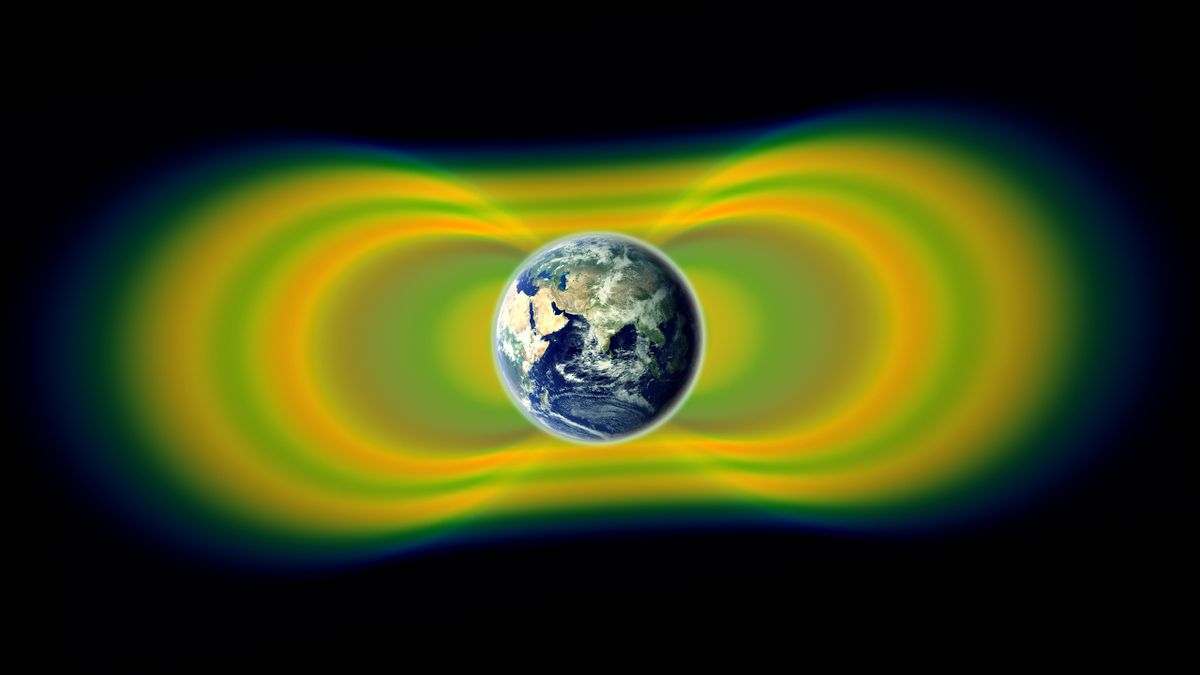
Van Allen Radiation Belts: Facts & Findings | Space

Eli over the years has been singularly unhappy about Fred Singer, there is more, but feel free to search Rabett Run for the details.  With the announcement of his death April 6, Eli went poking about the net and hooked an interesting whale.

Singer's best work was in the late 50s and 60s on Earths radiation belt, you know, the Van Allen stuff among related things. It turns out that while van Allen (James Hansen's doctor father, this is all very incestuous stuff as the bunnies will see) was the first to announce the discovery of, what else, the van Allen belts, the honor should have gone to a Soviet scientist, Sergei Vernov

What Eli found was a letter from Fred Singer to Alexander Dessler, yep, Andy's dad
Your point is absolutely correct. Vernov lost his priority to the discovery of the radiation belt because of Russian secrecy. Vernov’s instrument on Sputnik-2 recorded radiation belt particles six months before Van Allen’s in Explorer-l. But the Sputniks elliptic orbit penetrated the belt significantly only in the Southern hemisphere, and the Russians did not release the telemetry code to anyone.  

For nearly two years now I have been meaning to write you and comment you on the editorial “The Vernov Radiation Belt (Almost),” which appeared in the Nov 23, 1984 issue of Science.  
Now comes the ad for open science
Prof. Harry Messel, a noted cosmic-ray researcher and head of the School of Physics at the University of Sidney, told me the whole story in a Moscow hotel room (the Hotel Moskva, I believe) during the Cosmic Ray Congress in 1959. He recorded the Sputnik signal every time it passed over Australia, but they wouldn’t send him the code. When they finally asked for a copy of the recorded data, he told them to go to hell (as only Harry Messel could). Harry, you must remember, is a Ukrainian from Canada; he told the story with great glee.  
But the full story is a little more complicated. Vernov did record the radiation belt but never interpreted his results properly. I have analyzed the matter in a review article on “Geomagnetically Trapped Radiation,” published in Progress in Elementary Particle and Cosmic Ray Physics Vol. VI. (North Holland Publ., Amsterdam, 1962). I enclose pp. 249— 258, “Historical Introduction,” and draw your attention to p. 254. Vernov et al reported in 1958 a 40% increase in count rate between 500 and 700 km. But only 12% can be due to cosmic rays; the rest must be radiation belt particles. Of course, had they gotten data up to Sputniks’s apogee altitude of 1680 km, then there would have been no doubt.   
But Vernov is not the only one who missed discovering the trapped radiation. I don’t know about others, but I am certainly one of them ----four times to be exact!   
1) In a 1950 Aerobee firing off Peru, I measured the east-west asymmetry of cosmic ray primaries, mostly relativistic protons. But I also measured the ionizing efficiency of the particles and found a component of high ion densities (presumably low-energy protons) with a reversed E-W asymmetry. (These were trapped protons; I later developed a theory for their E—W asymmetry (see p. 274), eventually confirmed by Heckman’s observations.)   
My 1950 notebook indicates that I considered albedo protons emanating from and curving back into the atmosphere as an explanation. But statistics of the data were not good enough to draw firm conclusions. Some details are given in another review article on “The Primary Cosmic Radiation and its Time Variation” in Progress... Vol IV (1958), pp. 263-276. (See esp. p. 264).  
2) In the summer of 1950 I flew thin-walled Geiger counters in balloons launched from an icebreaker between Boston and Thule. In the auroral zone, off Labrador, the count rate went crazy. I concluded that I was seeing noise from high—voltage discharge in the instrument, as the air pressure reached a certain low value. I never published the results; but evidently I was seeing trapped electrons of the outer belt. I should have either had a student like Carl McIlwain, or flown thick—walled counters along with the thin—walled variety.  
3) By 1956 I was quite sure about the existence of trapped radiation (although I had not yet thought of the neutron albedo mechanism). I designed a 4-stage balloon-launched rocket for the Air Force OSR, to go to 4000 miles altitude. I then got the contract to supply a scientific payload, a simple Geiger counter. 
The Air Force called the project Far Side and diddled a lot. But right after Sputnik they tried to launch it in a great hurry from Eniwetok. I never learned officially why the project failed; all I know is that I never received any data from my instrument. Too bad; because I had published an article in Missiles and Rockets magazine, around 1957, that we would measure trapped radiation in the Far Side project.  
That has the smell of a embarrassingly failed launch
I was one of the contenders for a spot on Explorer-l, with an experiment to measure meteoric erosion, using a Geiger counter. It would have seen trapped radiation, but the experiment got bumped. End of story.  
I think this is the first time I have written all this down, or even thought about it in a coherent way. Your editorial stimulated all this; I know how Vernov must have felt. 
I suppose I owe most of my radiation belt insights to Hannes Alfven, from whom I learned a great deal about charged particle motion. Even earlier, John Wheeler at Princeton taught me some useful things about ergodic motion of particles in a trapping region.  
Someday I’ll document the evolution of the ideas and theory a little better. For the time being, the enclosed will have to do.  
My best wishes to you,

Monday, March 30, 2020

Mask 'em if you got 'em - but don't buy them, yet


Who knew antifa were practicing good public health? Bandanas are better-than-nothing substitutes for masks.

So, Vox.com did not cover itself with glory on coronavirus during the month of February. On Feb. 13 it mocked Silicon Valley efforts at physical distancing and said that data "from the CDC suggests that the flu is a greater threat to Americans than the coronavirus." I checked their NYTimes reference supposedly supporting the claim (archived here), and it doesn't.

Before that, on Jan. 31, Vox confidently declared that covid would not become a pandemic (they deleted the Tweet last week with a Nixonian vague reference to the Tweet no longer being operative). And on Feb. 25, Vox said "there’s no good evidence to support the use of face masks for preventing this disease in the general population."

I'm in my usual backseat driving position of critiquing something where I'm not an expert, but it wasn't hard to be skeptical about the masks. I wrote on Facebook on Mar. 2 that it was disingenuous to say masks protect medical workers but not the public. On some of this (not all of it), Vox was just uncritically reporting the consensus position. Historically we've needed the media do a better job of reporting the climate consensus, but a distinction here can be made between the massive scientifically-established climate consensus versus the motivated-reasoning guesswork by the establishment that wanted the public not to buy masks when they're desperately needed by medical workers.

To be fair, Vox seemed to clean up its act in March, and it's certainly no Trump. Not glorious, though.

I feel a little guilty beating up on the US government's medical establishment as they work hard while I sit on a sofa. Everyone all the way up to and including the Vice President are surely working hard right now. And I'm not beating up the 99% of the medical people working for the government that didn't make these decisions, but at the top there were major mistakes, and it wasn't just Trump and his cronies that made them. Producing a faulty test was a huge error, not importing substitute German tests was another, not allowing locally-made substitutes a third, and giving bad advice on masks/not telling people to wear bandanas and scarves a fourth.

Trump ran the show, these are all his mistakes. But when he's gone, there will have to be more work to guarantee they don't happen again.

Don't buy masks, yet. The government should've commandeered all of them, weeks ago. But if you have them, keep one or two to use and reuse, and give the rest away. In a month or two, there should be enough to buy them for everyone, which could be a big part of successfully transitioning back to a more normal world.

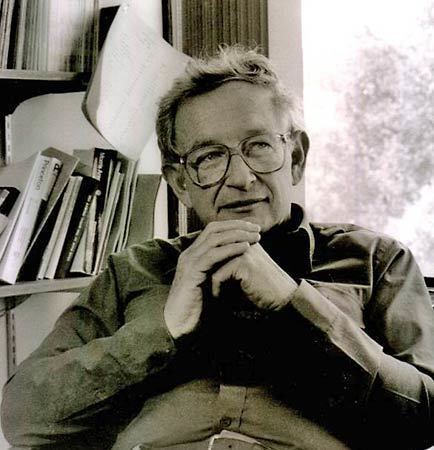
In Memorium Philip Anderson


Philip Warren Anderson Philip W Anderson American physicist Britannicacom


Philip Anderson has died at the age of 96. Worshiped (not too strong a word) by physicist of the condensed matter tribe, Anderson was also the father of Susan Anderson, an old (and missed) friend of Rabett Run to whom Eli and Brian extend their condolences in this time of her sorrow and difficulty.

Philip Anderson's Nobel Prize autobiography provides clues about him, his work and his life.


Saturday, March 21, 2020

Now is the perfect time for some types of outdoor climbing

I've got a dozen-plus tabs of relevant things I think I should blog about, and then I saw this at Slate, "Climbers, Please Control Yourselves: This might feel like the perfect time to go climbing outdoors. It’s not."

Slate pushes a semi-contrarian position often enough to merit its own nickname, the Slate Pitch. Sometimes it's interesting and useful, more often it's annoying and wrong. Kind of like contrarianism in general.

I'm a long-time mediocre rock climber and a much worse mountain biker (more on biking later). Now, in fact, is the perfect time for the type of outdoor climbing that I do the most and most of my friends do the most - top-rope climbing as day trips. You can easily maintain 2 meter distances, and it's very safe so you're not likely to end up in the ER. Top-roping means you can walk to the top of the cliff you're climbing and set up a rope system from the top. When you go back down and start climbing with a partner controlling the rope, you won't fall any more than the stretching distance of the rope. It's possible to get injured top-roping by climbing far to the left or right of the rope line and then falling, but you could also choose to not do that.

The main change from business-as-usual would be no carpooling to the climbing site. Okay, fine.

Slate's article talks about multi-day climbing trips staying at hotels, and sitting in crowded restaurants. You could, like, not do that. And I'm not buying their idea that getting gas and groceries is all that dangerous an activity.

The main good argument they have is that ending up in a hospital is pretty selfish thing to do these days, as well as a more dangerous thing to do than in normal times. So, you could still do lead climbing, multipitch climbing with really awkward systems of trading off gear while mostly keeping a distance from your partner, and camping away from crowds - but you'd have to climb at a nearly-no risk level which limits its interest.

Contrast top-roping and climbing generally to mountain biking. I only do pretty easy trail riding and even then I see plenty of opportunities to break a leg. My road biking buddies move much faster than me and deal with cars. And then there's just driving to any open space, where you can get into an accident on the drive.

So rather than "not climbing" the advice should be to change what you do to maintain physical distance and reduce risk below what is just acceptable to you, to a level where there's very little chance that you're taking hospital space.

Monday, March 16, 2020

A Simple Suggestion For Broadcasting School Lessons

When Eli was but a little bunny, New York City owned a radio station, WNYC, which during the day would broadcast school lessons. Some of them were for extra credit as it were, interesting stuff that teachers could play in their classrooms during the school day. Broke up the monotony of reading, writing and adding stuff up (Eli was a little bunny, little algebra, no calc). But there were also things that kids stuck at home sick could learn from and not bug mom (most often) for an hour or more.

Thus a small suggestion:

Television stations could use their sub channels to broadcast lessons for the kids at home. Cable broadcasters have even more room for learning channels. If they were feeling nice, a lot of this could be openly streamed so all that was needed would be a cell phone

There are broadcast ready materials from online open ed efforts, but it should be possible to recruit from the local ed folk

Here is a place to start

105 tools for distance learning and strategies for student engagement

https://www.albert.io/blog/tools-for-distance-learning/


Another


https://www.newamerica.org/in-depth/prek12-oer-in-practice/resources-get-started/

Currently open for the emergency

Math lessons by grade K-12

https://gm.greatminds.org/en-us/knowledge-for-all

The Wayback Machine has some curated educational sites


https://blog.archive.org/2020/03/11/schools-out-or-is-it/?iax=covidinfo%7cctalnk

Added 3/16 Curricula and other material from Minnesota


http://courses.oermn.org/

Monday, March 02, 2020

Bahamas v. Puerto Rico on renewable energy as resilient response to disasters

Renewable energy, especially in distributed microgrids, has a lot of advantages over fossil fuels that need large plants and a vulnerable power distribution lines. This is especially true in island countries that get hit with devastating weather and pay exorbitant prices for diesel power imports.

Puerto Rico seemed at least in the first year after Maria to take only token steps towards use of renewable power. The Bahamas, hit six months ago, seems to be doing better:

Exactly six months ago this evening, Hurricane Dorian slammed into the northern Bahamas. It was the fifth Category 5 Atlantic hurricane in just the last three years. Before that, there hadn't been a single "Cat-5" storm in nearly a decade.

There's a growing consensus among scientists that climate change is what's making hurricanes stronger and more destructive....But the Bahamas has found a ray of hope - specifically, a solar array - that can help its islands survive future hurricanes. And in the process, it may have important lessons the rest of the world should learn, as Mother Nature continues to brew devastating storms like Dorian.

To be fair to Puerto Rico, it's been several years since Maria, giving more time for renewable power and especially battery power to get cheaper, and microgrids to become more familiar to governments (and it's unclear from the report how much better Bahamas will actually do).

Hopefully this improved response will continue and put some silver linings on disaster response, as well as making climate adaptation assist with climate mitigation. See Rocky Mountain Institute's Island Energy Program for more info.

Saturday, February 29, 2020

Bolded emphasis added

(UPDATE 3/20/20: Politifact appears to be claiming that Trump was unsuccessful in actually cutting this funding, and it was restored by Congress. The Politifact article is not directly responsive to this claim, however, just a general assessment of the budget. I'd like more information to get a definitive sense, although it's clear what Trump's intent was. I find the other Politifact claims diminishing Trump's culpability to be unpersuasive and even more vague.)


Feb. 1, 2018 article about a decision by Trump to cut Center for Disease Control funding:

Four years after the United States pledged to help the world fight infectious-disease epidemics such as Ebola, the Centers for Disease Control and Prevention is dramatically downsizing its epidemic prevention activities in 39 out of 49 countries because money is running out, U.S. government officials said.

The CDC programs, part of a global health security initiative, train front-line workers in outbreak detection and work to strengthen laboratory and emergency response systems in countries where disease risks are greatest. The goal is to stop future outbreaks at their source.

Most of the funding comes from a one-time, five-year emergency package that Congress approved to respond to the 2014 Ebola epidemic in West Africa. About $600 million was awarded to the CDC to help countries prevent infectious-disease threats from becoming epidemics. That money is slated to run out by September 2019. Despite statements from President Trump and senior administration officials affirming the importance of controlling outbreaks, officials and global infectious-disease experts are not anticipating that the administration will budget additional resources....

The CDC plans to narrow its focus to 10 “priority countries,” starting in October 2019, the official said. They are India, Thailand and Vietnam in Asia; Jordan in the Middle East; Kenya, Uganda, Liberia, Nigeria and Senegal in Africa; and Guatemala in Central America.

Countries where the CDC is planning to scale back include some of the world’s hot spots for emerging infectious disease, such as China, Pakistan, Haiti, Rwanda and Congo. Last year, when Congo experienced a potentially deadly Ebola outbreak in a remote, forested area, CDC-trained disease detectives and rapid responders helped contain it quickly....

If more funding becomes available in the fiscal year that starts Oct. 1, the CDC could resume work in China and Congo, as well as Ethiopia, Indonesia and Sierra Leone, another government official said, also speaking on the condition of anonymity to discuss budget matters....

Global health organizations said critical momentum will be lost if epidemic prevention funding is reduced, leaving the world unprepared for the next outbreak. The risks of deadly and costly pandemic threats are higher than ever, especially in low- and middle-income countries with the weakest public health systems, experts say. A rapid response by a country can mean the difference between an isolated outbreak and a global catastrophe. In less than 36 hours, infectious disease and pathogens can travel from a remote village to major cities on any continent to become a global crisis.

On Monday, a coalition of global health organizations representing more than 200 groups and companies sent a letter to U.S. Health and Human Services Secretary Alex Azar asking the administration to reconsider the planned reductions to programs they described as essential to health and national security.

“Not only will CDC be forced to narrow its countries of operations, but the U.S. also stands to lose vital information about epidemic threats garnered on the ground through trusted relationships, real-time surveillance, and research,” wrote the coalition, which included the Global Health Security Agenda Consortium and the Global Health Council....

Without additional help, low-income countries are not going to be able to maintain laboratory networks to detect dangerous pathogens, Frieden said. “Either we help or hope we get lucky it isn’t an epidemic that travelers will catch or spread to our country,” Frieden said....

Officials at the CDC, the Department of Health and Human Services and the National Security Council pushed for more funding in the president's fiscal 2019 budget to be released this month. A senior government official said Thursday that the president's budget "will include details on global health security funding," but declined to elaborate.

UPDATE: nice catch in the comments by TransparencyCNP on how the high cost of medical care and inadequate insurance in the Trump Era is already hitting people for coronavirus issues, which can obviously affect people's willingness to seek treatment and prevent spreading the infection.

Friday, February 07, 2020

EQ and you (if you're a coyote or badger)

You may have seen the video:


I was excited about this because I've worked with both groups involved in capturing this video, Pathways for Wildlife and Peninsula Open Space Trust. Both of them have been involved in protecting Coyote Valley, a project I've worked on since 2003. Coyote Valley is the 7400-acre valley floor south of San Jose, stopping the post-World War 2 suburban sprawl from San Francisco through Silicon Valley. Coyote Valley sets the stage for growth going up and not out in California.

Protecting open space has much more value than preventing sprawl. It can sequester carbon as well as prevent carbon emissions from sprawl. It can also be crucial for maintaining wildlife linkages. The Santa Cruz Mountain Range is a large chunk of California habitat mostly separated from the rest of California habitat, with partial exceptions at Coyote Valley and along its southern margins. While large, it's not big enough to maintain permanently viable populations of rarer animals like mountain lions, and badgers. It could also be an important climate refuge - it's cooler than southern and eastern habitats adjacent to it.

The animals need to get back and forth though - they need both ways to get across highways, and welcoming habitats on both sides of highways. Protecting Coyote Valley and maintaining pathways for wildlife are linked.

It's especially true in the case of badgers, so that video, in addition to being cute, could be a waddling badger butt of genetic survival.

I did a bit of research on this hunting relationship between coyotes and badgers. It's been well known for decades. There are some claims that it was known by Native Americans - I don't doubt that, but the links I've read don't actually support the claim. Other badger and canid species live in the rest of the world, but I haven't seen any claims for the same behavior.

Cross-species mutualism doesn't have to be learned behavior but this certainly is, and it requires a certain amount of intelligence. Coyotes are already social animals but an adult badger is solitary and not primed to cooperate, so it takes some brains to do so. The cooperation is limited - they don't share the squirrels they catch, but they are still deliberately associating with each other and changing their behavior. This video shows travel together - it doesn't say how far they had to go to get to hunting grounds, but presumably it was at least not in immediate sight.

It's possible that the only thing they understand is that their own hunting seems more successful when the other animal is present. That's the Occam's Razor to make it happen. OTOH, it doesn't exclude that one or both animals understand a bit more, that the other animal's behavior helps their own. Badgers spend less time looking for fleeing squirrels when coyotes are present and more time digging, so they might understand.

Encephalization Quotient is an extremely rough, but readily-measured, parameter indicating an animal's intelligence. The larger the brain is relative to body mass, the more intelligent the animal is likely to be. Adjust the ratio for animal weight because large animals don't need brains to scale linearly with body size, and you've got EQ.

An EQ of 1.0 is about what you'd expect across mammal species. This paper says American badgers are at 1.4 and coyotes at 1.6. Social animals like coyotes tend to be smarter but it's interesting to see badgers up somewhat on the higher end. Being able to cooperate like this might be a factor that keeps evolutionary pressure on badgers to stay smart.

Somebody really needs to radio-collar a known pair of cooperating coyotes and badgers. It would be interesting to see how often they cooperate, whether they appear to be searching for each other, and the distance they travel together, all of which might give a sense of what they actually understand.

And meanwhile, protect their habitats and chances to cross highways safely.

Thursday, February 06, 2020

Why bother?

For reasons that defy explanation Eli was looking through Coby Beck's A Few Things Illconsidered, Skeptical Science  before SKS as it were, and came across this 

Denialism Flow Chart

The true horror, of course is that we are trapped in Twitter with no exit

Monday, February 03, 2020

Again in the Margins

While pursuing a chimera through his sea of bullshit, Eli came upon a second paper from Syukuro Manabe and Richard Wetherald, not the 1967 one in the Journal of Atmospheric Sciences, Thermal equilibrium of the atmosphere with a given distribution of relative humidity which pretty much nailed the 2x CO2 climate sensitivity, but a later one, The Effects of Doubling the CO2 Concentration on the climate of a General Circulation Model which appeared in the same journal, but eight years later (1975).

Before passing on to the material at hand Eli would like to point out that even the title of the first paper puts the wood to the plaint that climate science has always neglected the role of water vapor, but let us move on to the subject at hand. Before getting to business, it is worth quoting some of the conclusions from the second 1975 paper

1) In general, the temperature of the model troposphere increases resulting from the doubling of the concentration of carbon dioxide. This warming in the higher latitudes is magnified two to three times the overall amount due to the effects of snow cover feedback and the suppression of the vertical mixing by a stable stratification.
and
2) the temperature of the model stratosphere decrease because of the larger emission from the stratosphere into space caused by the greater concentration of CO2.
There is more (including more precipitation and evaporation), but what caught Eli's eye was a series of comments on Rasool and Schneider. Eli has always pointed out that R&S (and S agreed at about the time of the second paper) was that they over estimated the increased aerosol loading of the atmosphere and underestimated greenhouse gas forcing, but Manabe and Wetherald point to other problems
1) Rasool and Schneider did not take into consideration the fact that the temperature change in the stratosphere has an opposite sign to that in the troposphere
Since R&S were using Hansen's Venus model, not much of a surprise but something the Bunny had not seen before
2) The absorption of solar radiation is altered if the atmospheric temperature and accordingly also the water vapor content changes.  This factor was not considered by Rasool and Schneider
Which is all about the Foote Effect (TM Eli Rabett)