Saturday, July 16, 2016

Post Modern Views of Science

A couple of days ago, Eli went off and ranted about an old philosopher, James Blachowicz, and his take on science, which to Eli was, well, given the history of this thing, Eli pretty much thought that Prof. Blachowicz was eating magic mushrooms.

Given the placement in the New York Times, not surprisingly, there were a few other comments, and not surprisingly (to Eli, Eli being always right) they pretty much agreed with Eli

Jerry Coyn, writing under the Rommian title of "Is this the worst popular philosophy piece ever? A philosopher argues that science is no more reliable than philosophy at finding truth" and pretty much concludes that it was

If the NYT can publish tripe like this, perhaps it’s time for someone to pull a Sokal-like stunt, writing a bogus philosophical analysis of science and submitting it to The Stone. But perhaps that’s exactly what Blachowicz has done!
Ethan Siegel in Forbes discusses how Blachowicz' understanding of Kepler (and Galileo) is, to put it softly, lacking and Derek Lowe at Science also has a few words.

For a while now, Eli has been pushing the idea that science is characterized by coherence, consilience and consensus.

The Red Queen can hold any number of contradictory thoughts in her mind before breakfast but that only leads to confusion and is deadly for understanding. The Wikipedia has a useful description of consilience and why it is necessary for reaching a scientific consensus
evidence from independent, unrelated sources can "converge" to strong conclusions. That is, when multiple sources of evidence are in agreement, the conclusion can be very strong even when none of the individual sources of evidence is significantly so on its own. Most established scientific knowledge is supported by a convergence of evidence: if not, the evidence is comparatively weak, and there will not likely be a strong scientific consensus.
Kuhn pointed out that the consensus was very hard to change for good reasons, because a lot of evidence (consilience) had to be gathered and linked (coherence) to establish the consensus. That the consensus could be changed on very rare occasions is irrelevant because the overthrow (e.g. Relativity, QM) extended a strong consensus into new areas where it really had never previously been tested.  New science EXTENDS old science.

The tough part of this is that one has to have a strong understanding of the various threads which establish the consensus to appreciate the consensus and its strength.  Many do not.

They interpret the ability to modify the consensus as meaning that nothing can be certain, and if it cannot be certain then all statements are equally valid.  Einstein and Kuhn are frequently invoked.

For example, some, not to be named, but including philosophers and lawyers and liberal arts types claim that it is equally true to claim that the Sun revolves around the Earth as visa versa.

As to the Earth and the Sun, if you believe that the Sun revolves around the Earth, you basically don't believe in Newtonian gravity or the laws of motion.  There is some nonsense that should not go unchallenged, but that takes time.

Friday, July 15, 2016

Mike Pence. I remember that name....

UPDATE: others are also doing blasts from the past, turns out we should know him as Mike "Smoking Doesn't Kill" Pence.


Here it is, from my old blog back in 2009:


Mike Pence: skeptical of warming, but "reducing CO2 would be a good thing"


There's not much point in reducing CO2 unless anthropogenic climate change is real - it has no other negative impacts.*

Pence is the third-highest Republican Congressman in the House, considered a rising star, and appears to simply be stupid. His latest anti-climate change, plus refusal to acknowledge evolution is here. Yglesias has more on him not being very bright here, here(author of the Republican budget plan with no numbers attached to it), and especially here (couldn't understand the economic concept of moral hazard, even when explained to him).

While a party led by stupid people will be easier to beat, it can still cause a lot of damage in the American political system.

*I highly doubt this Republican party genius even knows about ocean acidification, and if he does, he just groups it into his climate change skepticism.

-------------------------------------------------------------------------------------------------------------------------------

Interestingly, I just came across this statement from Yglesias yesterday saying he was too hard on Pence way back when, and that Congressmembers are institutionally driven to spend time on anything except learning the subject matter. I'm not buying it - they can and should know basics about the areas they specialize in, and if Pence can't understand a subject like moral hazard when explained to him, that's pretty bad.

Sunday, July 10, 2016

The Scientific Method and the Philosopher Is Stoned


Have the bunnies ever noticed that in the dog days of summer, when nothing is happening, and even when it is, there always emerges an article on there is no such thing as science, or science is nothing special.  Well, the New York Times has done the usual and dredged up flem from another old philosopher who would enjoy a day in the sunday papers.  It agrees with the editor's stoned high school fantasies about science, a subject that they hated, just hated.  Amongst their other bad habits, editors and journalists are saps for post modernist denigration of science.  They don't quite understand why others value something they never understood, or tried to, and they want some of that.

A bunny, or at least Willard, might start with the ontology but at times it is easier to say what is not and why.  For example take the writing of a poem, something that the author of the article under consideration, James Blachowicz, did.  He relates how a poet, Stephan Spender, described the process of creating a poem, how Spender begins with a first draft, how he then evaluates the draft as to whether it expresses what he wanted to express and whether the form was pleasing to him.  The poet then modifies the draft to optimize the two criteria.

Blachowicz claims that this editing process is similar to "those associated with scientific investigation", and he generalizes his guff to wondering whether there is such a thing as a scientific method.  Eli, were he not such an understanding bunny, would think this is clear evidence of  confusion, of course it is hard to be more understanding than some such at ATTP who is, IEHO, too willing to excuse fuzzy thoughts.  But, dear bunnies let us forge forward.

Could a poem be a work of science?  What would poets be required to do?  The first criteria would be not whether the poem expressed what the poetry team wanted to express but that it accurately described the emotion that they were trying to describe, the second, that the poem was consistent with related poems that had been accepted by the poetry community.  If not, the poet would have to explain why.  A pleasing thing to a good poetry team would be if the poets could say, although there was some inconsistency with past work, how theirs extended and enlarged understanding of the emotions under consideration.  Of course, a terse and powerful poem that captured the source of many emotions would be meet with a stronger positive reception.

In other words, poetry would be characterized by consistency, consensus and consilience, which it is not.  No loss to poetry, but then again poetry is not science although some comes close.

Now Eli is fond of a good argument, meaning one that leads to careful thought, but Blachowicz goes three year old, segueing into a disputation about "justice" and "courage" and how neither can be defined although everybunny knows what they are.  Well sorry, justice and courage are social constructs, and the definition varies with time and place.  To think about Blachowicz' example

When Socrates asked “What is justice?” there was never any doubt that his listeners knew what the word “justice” meant. This is confirmed by the fact that Socrates and his listeners could agree on examples of justice. Defining justice, on the other hand — that is, being able to explain what it was conceptually that all these examples had in common — was something else altogether.
is to fall right down the Rabett hole.  People and societies do not agree on what justice is.  On the other hand electrons, climate sensitivity, DNA,  these all have definitions that scientists agree on, although they may disagree about the numerical values of some and try and improve the precision and accuracy of others.  It is the agreement on definitions and other basics that allows scientists to talk to each other.  Agreeing to definitions, such as what is a meter, what is a kilogram and so forth are the charge of scientific organizations such as IUPAC.  Eli wonders if philosophers have similar mechanism for agreeing on the meaning of justice.  He suspects not, but then again, IEHO this entire section of Blachowicz' writing is simply a confusion, a smoke screen.

For what you ask, well for a comment on Kepler's studies of the orbit of Mars.  Long and short, Kepler determined after much work that the orbit was an ellipse, after rejecting a circle and then an oval.  For those interested, the Smithsonian Astrophysical Observatory has many of the papers on Kepler's notes which are extensive.  But where did the idea of a circle come from, as some of the commenters on Blachowicz' piece note, it came from philosophers, and in their case from the kind of esthetic argument that Blachowicz uses.  Kepler was not happy about that
My first error, was to suppose that the path of the planet is a perfect circle, a supposition that was all the more noxious a thief of time the more it was endowed with the authority of all philosophers, and the more convenient it was for metaphysics in particular.”
Kepler tried an oval, but it did not work very well, and then an ellipse which did.  Blachowicz sees this in a pecular light
Kepler could have hammered out a patchwork equation that would have represented the oval orbit of Mars. It would have fit the facts better than the earlier circle hypothesis. But it would have failed to meet the second criterion that all such explanation requires: that it be simple, with a single explanatory principle devoid of tacked-on ad hoc exceptions, analogous to the case of courage as acting in the face of great fear, except for running away, tying one’s shoelace and yelling profanities.
Simplicity is nice, but not necessary, this argument fails on the same ad hoc esthetic basis as the circle, indeed, except for the simplest situations there are often multiple principles at work which must be teased apart and Blachowicz himself describes one.

But why, as the saying goes, does science work?  Blachowicz' answer is
If scientific method is only one form of a general method employed in all human inquiry, how is it that the results of science are more reliable than what is provided by these other forms? I think the answer is that science deals with highly quantified variables and that it is the precision of its results that supplies this reliability. But make no mistake: Quantified precision is not to be confused with a superior method of thinking.
Which, make no mistake, IEHO is a mistake.  Scientific results are not all highly quantified, indeed many are not quantified at all.  Consider anatomy if you will.  What science and the scientific method provide, as Kepler showed, is insistence on checking either the scientists own results, or the results of others.  This is, as it were, close to the viewpoint of Popper.  Of course, again IEHO, Kuhn does a better job of describing how scientists work, their method as it were.  The scientific method does not require quantified precision (though that is often good), it does require careful checking of any result and a delineation of the conditions under which the result is to be trusted.

Weird rhetoric behind "believe me" and "finding out what is going on"

 
Someone who made better use of rhetoric

One small benefit from the Trump phenomenon is better sensitivity to the same tricks, regardless of the speaker's tribal affiliation. I listened to a prominent speaker on my side of the environmental fence the other day, and was struck by how much he sounded like Trump, liberally interspersing his comments with "believe me," "I'm telling you" and similar. I'm not sure I would've noticed if it hadn't been for how often Trump would say those phrases, followed by outrageous assertions with no evidence to back it up. I eventually figured out that those words, "I'm telling you" are the support the speaker is giving for the factual assertion that follows.

So whenever you hear a speaker say "believe me" you are likely about to hear a conclusory assertion offered with no proof other than the credibility of the speaker. That's not always a bad thing - maybe the person's an expert and it's better to get many quick opinions rather than one deep backgrounder - but it's helpful to know that's all you're getting. And it's a rhetorical trick when used by a speaker you sympathize with - you think you've been told something and don't notice you've been offered no proof.

So, thanks Trump for the realization. In the case of my speaker, he was making predictions about the future, notoriously the hardest of predictions, based on "I'm telling you". I'm not giving it a lot of weight.

The other weird Trumpian rhetoric is saying we should ban Muslim immigration until we "figure out what is going on." What does that mean - could one possibly come up with a more vague metric for determining policy? What part of terrorism is Trump saying that we don't understand?

Of course someone could get a PhD in comparative studies of terrorism and not fully understand the subject, but that's not what Trump is talking about. This phrasing means to take vaguely formed fears and hate, or even a multitude of specifically formed fears and hate in the minds of listeners, and fit it all into something that pretends to be policy. As for "what's going on," Trump is letting people fill that void with whatever's in their minds, specific or vague, and think that Trump is saying the exact same thing. It's even trickier and more poisonous than figuring out what people want to hear and saying it back to them.

I'm sure it's been called out somewhere, but what's going on is cheap rhetorical manipulation.


UPDATE:  thought I'd add that Trump also often appends "believe me" to the end of an assertion about something he's going to do or an outcome that's going to be achieved, when he'd have no legal ability to do what he claimed and the outcome is pie in the sky. Democratic presidential candidates aren't free of this either on climate change, talking way too much about policies that require repeated 60-vote majorities in the Senate and a majority in the House, but obviously there's no comparison. 

Saturday, July 09, 2016

Gretchen Carlson to solve climate change

Mr. Smooth may have gone too far

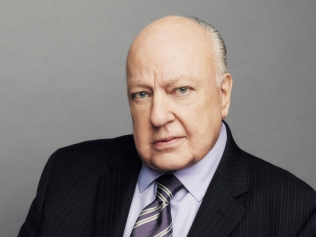
After Gretchen Carlson accused and sued Fox News Chief Roger Ailes for sexual harassment, six more women have come forward to say the same. That appears not to be the end of the accusations.

This may be enough to end a long-running feud between Rupert Murdoch's sons and Ailes, with Ailes getting kicked out. He appears to be the primary reason behind the terrible coverage of climate change at Fox News. Rupert Murdoch himself wasn't great but is much less involved in Fox operations in recent years, and the rest of Fox, run by his sons, is much better on climate.

Converting one of the primary news sources for conservatives into an accurate news source on climate could be extremely helpful. It's too bad what Ailes made these women go through. Maybe not entirely surprising though that someone who's unethical about his news coverage would be unethical in other ways.

Have One On Eli

Ms. Rabett's favorite

Monday, July 04, 2016

Today's Congress passes a stronger environmental law than in the 1970s

So that's not supposed to happen. The 1970s were the heydays of passing environmental laws, when Republicans made something of an effort to be second-best to Democrats on environmental issues.  The idea that today's Republican Party, of all the Republican Parties, would do something more sensible than it did 40 years ago seems impossible. Still that's what the Lautenberg Chemical Safety Act represents as a major improvement over the Toxic Substances Control Act of 1976, in large part by gradually ending the "grandfathering" of chemicals in existend prior to TSCA's enactment.

This improvement is partly because it's measured against the baseline of TSCA which was one of the weakest of the major environmental laws to pass in the 70s. That may have something to do with it being one of the later ones, by which point industry had started to catch on that these laws could have a meaningful impact on their business, and moved in to keep TSCA from doing the same. Still, the craziest Republican Party in modern history improved upon it. Why?

Environmental Defense Fund's Insider Podcast is helpful. They point out two reasons:  first that TSCA is so clearly inadequate that states began experimenting with their own regulatory controls - a mishmash of systems that did not enthuse chemical manufacturers. Second, to put it indelicately, is that cancer also kills powerful Republicans and their relatives. When a cancer has no obvious explanation, Republicans also wonder if living in at most lightly-regulated chemical soup could be problematic.

How much this translates to hope for climate change is unclear. State regulation does follow a parallel path, and one of the things enviros gave up to get the new law was easy state regulation, it's now pre-empted except through a waiver process. That may be a price for climate legislation in Congress, should it ever happen.

Perceptibly affecting powerful Republicans isn't as clear - they're already affected but don't perceive it. Maybe sea level rise will do it for coastal state Republicans, a few hurricanes from now.

Sunday, July 03, 2016

Reduction of Oxidation: Not So Easy


The historical root of chemistry is metallurgical, the creation of metals from ores.  This process is called reduction of the ore, and the trick to doing it was discovered early on, to heat the ore as high as possible after mixing it with charcoal.  The achievable final temperature at the time pretty much determined whether the locals were living in the copper, bronze or iron age.  There are nice video demonstrations on line. 

The charcoal is transformed into carbon monoxide or carbon dioxide depending on the conditions in the furnace.  This is pretty much how most metals are produced today, except that instead of charcoal, coke is used.

Coke is what happens to coal when you heat it but do not provide enough oxygen to form CO2 or CO.  This drives a conversion of the carbonaceous components of the coal to carbon and dries out any water content.  A detailed description of the process can be found at steel. org, but for practical reasons coke can be thought of as plain carbon or if you wish plain carbon with a bit of stone and other seasonings.

http://image.slidesharecdn.com/productionofironandsteel-150427080734-conversion-gate01/95/production-of-iron-and-steel-17-638.jpg?cb=1430122364
In any case, the point is that bunnies need coal to make iron and just about any metal they can think of, and that reduction of the ore to metal requires oxidation of the coke to CO2.  Even electrolysis of bauxite (Al2O3) to aluminum requires using graphite electrodes, which, guess what, during the electrolysis process, are oxidized to CO2.

Which, in the usual Rabett Run way brings Eli to the point of all this.  According to the EIA, 2012 production of coal is about 8.7 billion short tons. In real units that is 7.9 x 10¹² kg or, if a bunny prefers 7.9 109 tonne.

The amount of metallurgical coke produced in 2012 was about 0.7 billion short tons, but given the wastage from coke production, 2/3 of a ton of coke is produced from a ton of coal.  Multiplying, dividing and so forth (hopefully correctly, this comes out to about a billion short tons or  0.9 109 tonne.

Bottom line is that about 1/8th of the current coal mined is used for metal refining and this is still quite a bit, making it harder to reach zero CO2 emissions. 

Eli apologizes for this Sunday sadness.

Tuesday, June 28, 2016

Call it a Cameron


David Cameron has done it.  The United Kingdom is breaking apart, the EU is getting ready to toss the Brits and the economic damage already exceeds two trillion, which whatever the Weasel may think is real money.  And oh yes, the torch Cameron lit is being used to burn out those the leavers denigrated.

There was no reason for last week's referendum except Cameron's desire to cement his position in the Conservative Party. The incompetent way that he set the terms of the vote and prepared for it would, were there justice, lead to derision being showered upon him should he dare show his face in public.

Eli proposes that "a cameron" from here on out be used to describe disasters caused by unlimited self regard and incompetence.   Hopefully Donald Trump does not get his turn to pull a cameron

Amongst the link list, James Annan puts it best.  Go there and read his post, but Eli strongly disagrees with 

I can't help but conclude that the best outcome would be for the new Govt to reject the referendum result (and fight an election on that basis). There is no good exit plan or outcome that I can see. Of course it would inevitably destroy a few political careers and we'd have a bit of rioting, but that's better than the alternatives.
This is simply not on offer.  The rest of the EU will not go forward with the UK as a member given the history of special pleading and how the EU became an excuse for everything that was wrong in Britain and the current political situation.  Eli really cannot see the Poles or really any of the others being generous about any terms, let alone continued membership.

So what is on offer? At best membership in the EFTA with Switzerland, Norway, Iceland and Lichtenstein.  The EFTA (European Free Trade Association) gets access to the EU single market under the condition of following all EU rules including those covering free movement of people between all the EU and EFTA members.  The get to follow the rules, but not make them.  The EFTA members favor England and Wales joining because it would allow them to have a bit more input into negotiations with the EU, but to a country the EU is not happy with the Brits so there are no guarantees on that.  Norway is not really on board but offering them the Shetlands would be an interesting bribe.

Of course, that leaves Scotland and Northern Ireland.  If the EU figures out how to cover the transfer payments from the UK to both, then, they are probably gone.  Northern Ireland could rationally have a status as a special administrative area in Ireland that the Unionists might be happy with.  A unified united Ireland is not likely, but as James and others point out, closing the border between Ireland and Northern Ireland would wipe out all the gains following the Good Friday Agreements.
The Irish question hasn't been addressed at all, as far as I can tell. It seems near-inevitable that Brexit will rip up the Good Friday Agreement, since that is underpinned by free movement over the border and the primacy of the European Convention on Human Rights. Sinn Feinn are already agitating for reunification, and I can't blame them at all. Even a prominent Unionist politician is openly encouraging Northern Irish to apply for Eire passports (another outcome of the GF agreement) and the Belfast PO quickly ran out of forms. The Good Friday Agreement, which successfully drew a line under 100 years of terrorism and violence in Northern Ireland and the mainland UK, was the one remarkable achievement of an otherwise unremarkable Major administration and it's a great shame to discard it so casually and with so little forethought. I'd think the best outcome we could hope for there would be a relatively straightforward and peaceful reunification process for Ireland as a whole, but there will be a whole lot of unhappy people whatever happens, and the peace there was fairly fragile in the first place.
Eli recommends reading Shoco's series of tweets to get a better idea of the coming disaster if the border is closed.  There are 42 tweets, despair in all.

Scotland is simply gone from the UK.

So, is there any hope for England and Wales.  Not with the current crew. 

England and Wales need a government of national unity that will face up to the cameroning and start to dig out.  There is obviously no one in the House of Commons up to the job. Perhaps there is one in the House of Lords. 

One name suggests itself to Eli, but admittedly Eli is an not a Brit, Gordon Brown. As former Prime Minister and Chancellor of the Exchequer he has the tools, and perhaps a dour Scot for a dour time is needed, but certainly the fractured political system can not continue if anything is to be left of the United Kingdom.


Monday, June 27, 2016

News From Ethon


Eli made an interesting point on Twitter (this assumes that a) Eli can make an interesting point and b) that an interesting point can be made on Twitter, but no matter) about energy mix. 

The nature of the thing is that the world's electrical energy needs can be met by renewables, e.g. solar, wind and hydro, but the intermittent nature of the first two require overbuilding both the installation and the distribution network and as the complexity of the distribution network increases, so does that cost and the time needed to deploy.  It can also lead to sudden surges in birthdays when the network fails.

Nuclear baseload on Eli's other hand can balance the amount of overbuilding necessary but it was pointed out that the balance requires controlling costs and reducing construction time.


Saturday, June 25, 2016

Federation of Planets hits a setback

Cameron should've found out what was said in the speech.

I used to be a fervent supporter of limited, democratic international government, and I remain a much more jaded supporter of same. We'll get there in a century or so barring the Singularity, but we just hit a snag with Brexit.

William's got a good post on it, as does most anyone with a brain outside of Britain and nearly half the people inside it. I'll add to his points that the situation reminds me a little of the runup to the Iraq War, where the entire rest of the world said "WTF?" to us Americans (partly excepting the Brits) and that made virtually no difference to our politics. 

I also agree with him that immediate economic repercussions will likely be somewhat limited. Regardless, we'll need a few more days to see what the short-term impact will really be. Medium-term it depends on what the Leave campaigners and the EU seem to be aiming at - if it's a Norway-style, you obey all the rules but have no control and that somehow feels good outcome, then the economic impact could stay limited. If they want to take actual economic control of their borders, then they're in for serious problems.

Mostly in agreement with William about the stupidity of EU leaders threatening to punish Britain. I think they're not taking the long-term view - if the election had been held ten years from now, the Remain side would've won - and maybe it will, if you don't go out of your way to alienate them. (My idle speculation, btw, is that Cameron is stalling to October in case the economy or something else gives him a chance for a redo election.) Where I'd disagree somewhat is that EU's primary job during the split is to look out for their side. They shouldn't go out of their way to punish Britain, but protecting Britain's interest is the task of the British negotiators. 

Interesting article here on Greenland's exit from the EU thirty years ago - it took them 3 years of contentious negotiations to get this island of 60k people out, and now some people there want back in. Have fun, everybody.

Finally, various people like Kevin Drum have said stop blaming the economy, that there's an obvious xenophobic and racist component in significant parts of the support for both Brexit and Trump. That just sends us to the next question though - why are they happening now. In America at least, I doubt our racism is stronger now, certainly not stronger than 20 years ago. So there is more to it - maybe just an accident of political conditions, or maybe something more is happening.

Tuesday, June 21, 2016

Margin Call, or Jo Nova, Wanna Be Hedge Fund Manager

Jo Ann Nova, David Evans and a guy by the name of Chris Dawson, CEO of the Lord Monckton Foundation are asking for donations to establish a something or other, in which said something or other will do something in some undisclosed way to slay the sky dragons.

Chris Dawson is cagey about what the something or other will be except it will be a hedge fund, whatever that is, and everybunny knows that hedge funds are the key to riches and have special tools and by the way climate change is a crock and the hedge fund of Jo Ann's dreams will . .

. . . short-selling overvalued renewables stocks, and doing other things that profit from cooler weather or collapsing subsidies — but which fund could you invest in to manage that? It’s a niche crying out to be filled. David and I liked this idea so much when we were approached by Chris Dawson two years ago, we got involved in developing Cool Futures (and obviously stand to benefit if this comes together, see the Disclosure at the end). Cool Futures could change the game in so many ways.

. . . . With a self funded, highly profitable due diligence process and cost benefit analysis on the science, economics and finance of climate change, we will literally hedge our bets on climate change and on changing climate change policy.
The Weasel has expressed a few words of derision,
Bored with force X from outer space? Was Force F just too fuckwitted, and part 22 just too dull? Then why not play “hedge funds”? Hedge funds do lots of complex maths and make lots of money (only not so much recently); they also have the advantage of being opaque. So play today, with Jo Nova and her band of performing marsupials. Yes, I know, its a picture of a monkey with an arrow up it’s bum, and a monkey is not a marsupial. But no known mediaeval manuscripts feature marsupials.
Context, context: I forget the context in my obsession with primate posteriors. coolfuturesfundsmanagement is, like, a hedge fund. Run by Jo Nova! And some others. Or perhaps better, a wannabe hedge fund with a severe shortage of moolah. And its going to hedge against cooling, maan. Tagline: “Are we preparing for catastrophic warming when we should be preparing for cooling?”
It's hard figuring out exactly what this "fund" is going to do except raise money to figure out what they are going to do and indeed Chris Dawson is pretty cagey about this because it would be dangerous to actually say that they are raising money for a hedge fund because investment in hedge funds are limited to a qualified (e.g. very rich) people who know what they are doing and can afford to lose their money.  Minimum US qualifications are a net worth of a million, and income of over $200K in the past two years, and oh yes, prospects of making that or more into the future.

But no, there is no such hedge fund, but the ask is for money to "set up" such a hedge fund which will then go seek investors. And, of course, since it will be housed on one of the Caribbean islands well known for housing tax evasion schemes, Eli assumes that the incorporation papers will be drawn up by Mossack Fonseca. Of course, hedge funds being inherently risky this becomes a lot like asking rich people to contribute mega dollars to Donald Trump so he can rip them off.

But wait, why the Cayman's or similar to house this "hedge fund"  Well, guess what, there are no limits on who is a qualified investor in a Cayman "hedge fund", unlike the US where you have to have a minimum of a million net worth and an income of $200K.  Given this and a good guess at how much the net worth and income of the inhabitants over at Nova's offered this kinky opportunity.  Now some, not Eli to be sure.

ATTP points out that, well, the facts assumed are taken from a rather tall cherry tree, but the grifters have already scored over 42K$ US.   This gave rise to a hilarious (well Eli is easily amused, how else do you think he has made it to a ripe old age) series of tweets, starting with

upon which Paul, just Paul borrowed the Pielke humphing apparatus and replied

and it goes neener neener for a while as twitter is won't, but, the answer is simple, these clowns are not hedge fund managers, they are hedge fund manager wanna bees. 

A bunny wanting to flush their hard earned dollars down the toilet would do better giving directly.


Sunday, June 19, 2016

Someone else notices gas stations are disappearing

This time it's Daniel Gross at Slate, noting a 25% decline in stations over a decade. He acknowledges the importance of extraneous forces like pricier real estate and fleet vehicles switching to natural gas, as well as future impacts from driverless vehicles. Gross also highlights electrical vehicles and plug-ins as a force, though. He doesn't quite get to the virtuous cycle argument - that as market share for electric increases, the market for gas stations suffers, gas stations disappear, gas vehicles become less convenient, and market share for electric increases even more. But he's heading in that direction.

Among the other tidbits Gross finds is Norway contemplating a ban on gas engine vehicle sales starting in 2025 (with Netherlands and even India saying something similar, but I find Norway more believable).  EVs are 20% of current sales in Norway - when penetration reaches those levels, then these proposals don't seem outlandish. It's one way to accelerate the virtuous cycle of EVs replace ICEs.

Monday, June 13, 2016

Astrobiology Is a Crok


Now some, not Eli to be sure, want to know why Eli thinks astrobiology is a crok.  Ever helpful, allow the Bunny to explain.  There are many reasons but it starts with Enrico Fermi.

Lots of things do.  Fermi was the type of thinker Eli has always aspires to and hopefully on occasion is.  As Philip Morrison wrote, a Fermi question allows

... the estimation of rough but quantitative answers to unexpected questions about many aspects of the natural world. The method was the common and frequently amusing practice of Enrico Fermi, perhaps the most widely creative physicist of our times. Fermi delighted to think up and at once to discuss and to answer questions which drew upon deep understanding of the world, upon everyday experience, and upon the ability to make rough approximations, inspired guesses, and statistical estimates from very little data." [Philip Morrison [1]]
The story goes that one day Fermi was munching at lunch with colleagues when the question of extraterrestrial civilizations came up.  They went through the exercise of thinking about how much time and resources it would take to spread through the galaxy and
Fermi realized that any civilization with a modest amount of rocket technology and an immodest amount of imperial incentive could rapidly colonize the entire Galaxy. Within ten million years, every star system could be brought under the wing of empire. Ten million years may sound long, but in fact it's quite short compared with the age of the Galaxy, which is roughly ten thousand million years. Colonization of the Milky Way should be a quick exercise.

 So what Fermi immediately realized was that the aliens have had more than enough time to pepper the Galaxy with their presence. But looking around, he didn't see any clear indication that they're out and about. This prompted Fermi to ask what was (to him) an obvious question: "where is everybody?"
Now this is not quite astrobiology which in its weak form merely asks if there is any biology out there, but at this point it would be well to look at Brian's most recent post, where he discusses the morality of research on better ways of extracting fossil fuels.  There is, sad to say, a strain of people who want to escape to space, terraform Mars, visit the stars, so that we can escape responsibility for dealing with the problems we are creating for ourselves on Earth.  Even sadder and more common is the fixation of many more on an afterlife, the belief in which is coupled to escaping not only the responsibilities for this Earth but also the trials and tribulations of the same.  Decoupling of this sort is not a good thing.  Before flaming, allow Eli to point out that this is not an attack on the religious or the space mad, but rather on those who use either to ignore responsibility.

The last part is from personal experience.  The NASA Astrobiology Program was started as a consequence of a claimed finding of polycyclic aromatic hydrocarbons (PAH in the business) in a meteorite that was expelled from Mars, landed in the Antarctic and was discovered.

This was amazing.  To Eli what was amazing was the study that showed the rock came from Mars.  He was rather more skeptical of the analytical chemistry and the possibility that the rocks had been contaminated over many thousands of years on Earth, but that is not the story.  What the story really is, is how the news was received at NASA.

NASA is chronically underfunded and survives only because of public support driven in large part by the public's interest in space.  To the NASA administration the Public Affairs Office is the key part of the agency.  Evidence of "life" (OK of PAHs, but they didn't sell it that way) was immediately seen as a great way to sell both space science and the manned space program, two of the main parts of the Agency.

At the time Eli was running a summer program at Goddard working with the University Affairs Office there.  The Director of the Office, Gerry Soffen was an amazing guy (you can read about him here and here).  He also was one of the most important people in the agency who was a biologist, having been the Project Scientist for the Viking landers on Mars which search for life there and did not find it.  True believers still believe Gerry lied.

In any case Gerry was tasked by Headquarters with putting together a much larger program than the small one that existed called exobiology.  The idea was to not anchor the program in a single location but rather creating a distributed institute which had obvious political advantages and off they went.

The meteorite discovery was an important impetus for Mars exploration missions, even though doubt has been cast on how pristine the rock was and how the issue was handled since then.  When Gerry asked Eli what he thought, the Rabett replied that although that he was amazed by the rock solid evidence that the meteorite came from Mars, he was less impressed by the chemistry knowing something about the technique used and the focus of research in the lab where the chemical characterization was done.  In short they were not geochemists.

The doubts about the meteorite results arose very quickly, within two years, but by that point NASA had already decided to emphasize astrobiology.  And many things became astrobiology which are really astrochemistry and astronomy.

All of which is why Eli believes astrobiology is a crok.

Sunday, June 12, 2016

Researching cheaper fossil fuel extraction is unethical

That's not to say that researching fossil fuel extraction in general is bad. New technologies to make it safer, less environmentally damaging, and better understood in terms of environmental impact is fine. Research to make fossil fuel use cheaper also may not be a problem if the research improves the energy efficiency, in effect reducing the carbon emissions from fossil fuel use. The problem is research that provides no help with emissions but instead harms the low-carbon market in the future.

We need to transition away from fossil fuels, especially coal but not just coal. I don't know if emissions 15 years from now will be lower than today but it would be better if they were, and they must trend downward. Research that makes fossil fuel extraction cheaper has no immediate economic benefit, it just changes price levels down the road as it succeeds and spreads. Fracking is a good example of something that was decades in the making and is still spreading internationally.

While some research may be applied quickly, the more likely and widespread application of some bright new idea that arises today is 10-20 years in the future. Low-carbon power sources will be much more widespread then, so the alleged need for fossil fuels will be less, and the urgency to stop using fossil fuels will be even greater.

As usual, natural gas is the trickiest component, but just as new natural gas plants don't make sense, new research to make natural gas cheaper doesn't make sense. Any bridge argument for natural gas has little bridge left to cross in 10-20 years in the future, and becomes a liability instead. And as with new gas plants, investment in research requires a payback period. Researching cheaper fossil fuel now is an attempt to promote fossil fuel use over renewables 20 to 40 years from now.

I think ending this type of research at the university and governmental level should complement the current divestment movement. My alma mater, Stanford, did the right thing by divesting from coal but refused full divestment. I know that Stanford has some complicated investments that would take some time to unwind, and I believe they're in natural gas. The complication by itself isn't a barrier to divestment - I think no one would object if Stanford took a little more than the typical five years to complete divestment. What may be a barrier, though, is the research aspects.

Getting to a speculative level, I suspect that Stanford's complicated investments have a significant research component, and that the real financial value Stanford sees is in its research paying off - i.e., making fossil fuel extraction cheaper. That's problematic, and I don't think they have thought it through or even have been confronted with it.

As the link shows, Stanford is establishing a climate task force to examine operations, research and teaching (investment is somehow not mentioned, must just be an oversight). This could be an opportunity to examine whether Stanford should research or should invest in research that makes fossil fuels cheaper in the future, right at the time that we need to end using them.

Friday, June 10, 2016

The Frame War: How Skeptics Lost the Climate Debate


Many in the community Eli slums in twit and blog about Exxon, about climate risk and recent attempts to force fossil fuel companies to confront the risk to their business of climate change.  At the Exxon stockholders meeting just last month a motion to that effect failed with 37% of the voting shares being in favor.  That is an outstanding shot across the bows of Exxon management, 37% means that many significant economic players have come over to the side of yeah, climate change is not only a risk to people, but also our money, but there is more.

Now some, not Eli to be sure, who might not be paying attention, indeed Eli was not, but the Bunny was at a recent seminar on the economic issues of climate change with some of the high and mighty holding forth, and they kept coming back, one might, only might say smugly, to three letters of the alphabet, FSB and the Bloomberg Committee.

Eli sat up bolt upright because he thought that there were four letters FASB, the US Financial Accounting Standards Board, basically the guys who killed defined benefit retirement by making the costs appear out to infinity on any employer who offered one.  They also trashed the Bunnies retirement health insurance plan for the same reason.  Were they taking an interest in meeting the accounting challenges of climate change?  Big news if so (and this will require looking into)

But no, this is the Financial Stability Board, a construct of the G20, more exactly the Finance and Treasury ministers of same the G20 being the 20 most economically important countries in this Galaxy (Eli thinks that astrobiology is a crock).  The FSB was formed after the recent 2008 economic meltdown

The FSB promotes global financial stability by coordinating the development of regulatory, supervisory and other financial sector policies and conducts outreach to non-member countries. It achieves cooperation and consistency through a three-stage process, including monitoring implementation of agreed policies.
and as a creature of governments and especially the finance ministries of governments it is not to be sneezed at.  The FSB IS concerned with how the threat of climate change to economic stability
Policymakers have an interest in ensuring that the financial system is resilient to all forms of risk. In April 2015 the G20 asked the FSB to consider risks related to climate change and in November the FSB proposed the creation of an industry-led Task Force to develop recommendations on climate-related financial disclosures. Appropriate disclosures are a prerequisite for financial firms not only to manage and price climate risks accordingly but also, if they wish, to take lending, investment or insurance underwriting decisions based on their view of transition scenarios.
Just what the activist shareholders are trying to drag the fossil fuel companies to, and they are resisting.  The task force was put together in December 2015, and Michael Bloomberg is the chair.

That should cause some bunnies to sit up in their seats.

A first report on the lay of the land has already been published (more later) and
During the second phase, the Task Force’s work will focus on delivering specific recommendations for voluntary disclosure principles and leading practices, if appropriate, with a view to issuing a report for public consultation by end-2016. As part of its work the Task Force will conduct public outreach to engage a wide and varied range of stakeholders as it develops its recommendations.
The intent of the FSB can be read in the next paragraph
The work of the TCFD builds on the successful work of the Enhanced Disclosure Task Force (EDTF), which was created to provide recommendations on developing more effective bank risk disclosures
and that is what the TCFD is about
The Task Force on Climate-related Financial Disclosures (TCFD) will develop voluntary, consistent climate-related financial risk disclosures for use by companies in providing information to investors, lenders, insurers, and other stakeholders. The Task Force will consider the physical, liability and transition risks associated with climate change and what constitutes effective financial disclosures across industries. The work and recommendations of the Task Force will help firms understand what financial markets want from disclosure in order to measure and respond to climate change risks, and encourage firms to align their disclosures with investors’ needs.
Stress tests for Exxon bunnies and voluntary is likely to become not optional real quick as governments implement the rules.

Sunday, June 05, 2016

McArdle messaging mess

Lost in her errors and insults flung at the scientific community, and at her political opponents who accept climate reality, was the only part of Megan McArdle's argument that should matter:

....there are folks like me who aren’t sure enough to make a prediction, but are very sure we wouldn’t like to find out, too late, that the answer is “oops, catastrophic.”
Okay, so she's very sure that we shouldn't follow a policy pathway that makes catastrophe possible. What does she want to do with that framework? I see she semi-approvingly cites to a lukewarmist, kind of a bad sign. Said lukewarmist said basically stop doing everything we're doing now to fight climate change and impose a carbon tax instead, but doesn't say what we should do given that the Republican Party rabidly prevents all attempts at imposing a carbon tax. McArdle, somewhat to her credit, says he doesn't want to do enough, but again fails to tell us what enough is to her.

My two takeaways:

1. She's mad at the rest of us that her tribe is wrong, so even as she semi-admits they're wrong, she throws as many insults at climate realists and adds as many mistakes as she can, starting with the idea that the flaws in modeling human behavior demonstrate similar flaws in modeling the physics of climate. The important message, that we need to act, gets lost in her discussion of alleged communication failures by people outside her tribe.

2. McArdle has (possibly) made an interesting leap over a divide where many lukewarmists/denialists haven't. A common denialist position short of complete denial is to accept scientific reality up to the point at which that reality would require them to shift their policy positions, and then for mysterious reasons, they suddenly find that the science no longer works. McArdle seems to allow we need to do something. How she deals with the binary choice issue between Republicans and Democrats was left unsaid here, but could be worth pursuing.

Finally, I'd add that I'd write this very differently if I expected McArdle to read this and wanted to influence her. I'm writing to us realists here, and I'm mostly just mouthing off without expecting to change much. Maybe climate realists should try more, or at least check in periodically with people like her, despite the annoyance involved. But for her part, if she were really trying to influence "alarmists", then she's doing it wrong.

Saturday, June 04, 2016

A Weekend Puzzler


The Denialati are busy showing everybunny figures created by John Christy


Excellent examples for the Eli Rabett Weekend Puzzler contest.  To explain why these figures are both correct (well Eli would like to know where those 982 stations are, but he can make a good guess) requires only that the bunnies have been reading and remembering one of Eli Rabett's seminal contributions to combatting bullshit and have a native distrust of a bottom dealer like John Christy. 

Sit back and have a drink of your choice with a partner of your choice.  All entries should include a small check for the Bunny Friend Alliance Ethics Committee and at least one of these


My spirited defense of Bush and Trump

I'm going back to one of my arguments, that in no way was Bush Junior the worst president in US history - he's the third worst. History and historians are pretty clear that James Buchanan was the worst ever, and even a President Trump is going to have to stretch to be worse (although it's not impossible). Reading more about Buchanan, I had no idea that he was involved in making the Dred Scott decision much worse, and that his mismanagement helped trigger the start of the Civil War at Fort Sumter.

I think history's pretty clear about Franklin Pierce being second-worst, even if historians themselves are a little vague (come on, Harding was just a buffoon, he doesn't rate, and Andrew Johnson's mistakes after the war are no comparison to the mistakes that allowed it). Accommodating the South and expanding slavery were Pierce's and Buchanan's response to the impending disaster, and they made it happen as much as actively evil people like Calhoun and Davis.

Bush can't handle this competition.

Moving on to Trump, it's outrageous to call him fascist - he's authoritarian, someone who respects and might want to emulate dictators and their violent repression, but without the ideological and intellectual development to espouse a theory of total domination of the individual by the state or ethnic identity. His personality is similar to Mussolini, but the only thing he cares about is Trump, not the crushing of the individual under ethnicity.

The only way I see to calling Trump fascist is to equate the word with authoritarian, which is stupid. English already has a word for someone with dictatorial tendencies, and if fascist becomes a duplicate for it then we don't have a word for the even-worse thing that fascism described. It reminds me of the tendency to redefine terrorism from violence directed at civilian for political reasons to politically-directed violence that the speaker disagrees with.

Since I haven't been feeling the Bern, I will give Bernie some applause for calling out the morons who have used violence to keep citizens from being able to hear Trump. What I find strange is the number of people on the left who think violently interfering with people's free speech and assembly rights is wrong, but non-violently interfering with those rights by blocking access and shutting down speeches is somehow good. My term for people who do that stuff is authoritarian, even though some might consider themselves anarchists.

Friday, June 03, 2016

It's Friday