Friday, May 01, 2015

You Load 16 Tons
Don Blankenship, the former CEO of Massey Energy, aka coal in WVa, has a Nixon problem. Turns out the Don recorded his phone calls and now the prosecutors have them. How they have them is one of those stories.
When Blankenship was under pressure, he sold Massey off to Alpha National Resources with the understanding that Alpha would cover his legal expenses, and, of course, he has them, being under indictment for evasion of mine safety and financial reporting requirements.
The Charleston Gazette reports that when Alpha got into Blankenship's office they found a telephone recording setup and a pile of tapes. The listened to the tapes. They blanched. They turned the tapes over to prosecutors.
Now this was not a totally disinterested act of public responsibility. After all Alpha mines coal, but as they now say, since Blankenship was actually doing the things that he is charged with they have no responsibility to pay for his defense.
Blankenship was infamous for forcing his mine workers to run coal at all costs and obstructing the Mine Safety and Health Administration (MSHA) and their inspectors, again at all costs, and he knew what he was doing
“Sometimes I’m torn with what I see about the craziness we do,” Blankenship told then-Massey chief operating officer Chris Adkins in November 2009. “Maybe if it weren’t for MSHA, we’d blow ourselves up.”
Blankenship said, “I know MSHA is bad, but ... I tell you what ... we do some dumb things. I don’t know what we’d do if we didn’t have them.”Coal mining is dirty
Tuesday, April 28, 2015
The Good Donor's Choice

------------------------------------------------------------------------
Ms. Polmisano's supplies project at Armistead Gardens Elementary School in Baltimore is one Eli gave to.
My Students: "Tell me, I'll forget. Show me, I'll remember. Involve me, I'll understand." This quote sums up our approach to learning in our STEM Resource Classroom. Throughout the year, students of all ages actively engage in engineering design challenges that aim to solve real world problems.
Our students are smart, curious, thoughtful, and respectful. They love learning and are always eager to try something new! They value what they have, which isn't always much. Our school is a Title I school located in Baltimore City. As a large urban school district, resources are spread quite thin. We are a PreK-8th grade school located in East Baltimore. Over 600 students attend our school and represent multiple nationalities.
Our students are curious, creative, and cooperative learners! They look forward to our projects with excitement and anticipation. Our classroom is a highly active and engaging learning environment. Students are always on the go as they’re guided through the Engineering Design Process. By brainstorming, planning, creating, testing, and improving products and prototypes, students are learning and applying science and math concepts, while exploring a variety of fields of engineering.
My Project: Students will engage in two new engineering challenges where they will explore materials and their properties in order to build devices. We will begin with simple machines, where students will research catapults, and explore the function of levers. We will test a variety of materials while designing a simple catapult system. Student teams will then be provided with a variety of materials to design their own unique catapult system, and compete in a catapult showdown to determine which models succeeded with both distance and accuracy.
We will then move on to our hydraulics and pneumatics unit, where we will explore the mechanical properties of liquids and gases. Students will participate in a variety of demonstrations and hands on activities to better learn how air and liquid can be used to design and improve mechanical systems. They will then develop their own pneumatic or hydraulic system that can be used to accomplish a common task.
In order to construct these designs and complete these investigations, my students require various building materials including syringes, pneumatics and hydraulics kits, catapult kits, a bottle launcher, paint stirrers, glue guns and glue, and rubber bands.
Today's students are the future scientists and engineers of tomorrow. It's important for educators to help students learn the skills and knowledge needed to be successful in these fields. Engineering challenges allow students to explore science concepts, apply math skills, and become familiar with STEM careers. These hands on activities engage all learners, and help students realize their valuable role on a work team. Students walk away not only knowledgeable, but also inspired and empowered!
My students need syringes, pneumatics and hydraulics kits, catapult kits, a bottle launcher, paint stirrers, glue guns and glue, and rubber bands, to explore the physical science concepts of hydraulics, pneumatics, levers, and simple machines.
Donor's choose.
Scheduled for publication in Energy and Environment
So Eli was looking at the tweets and the Bunny came across this from Roger Sr.
Primary assessment product will be ISI recognized peer reviewed paper(s) - http://t.co/pvzRF0yXlF An overdue evaluation.
— Roger A. Pielke Sr (@RogerAPielkeSr) April 27, 2015
about his plans for publishing. As Victor Venema puts it
By coincidence this week two initiatives have been launched to review the methods to remove non-climatic changes from temperature data. One initiative was launched by the Global Warming  Policy Foundation (GWPF), a UK free-market think tank. The other by the Task Team on Homogenization ( TT-WMO ) of the Commission for Climatology (CCl) of the World meteorological organization (WMO). Disclosure: I chair the TT-HOM. . .
Some subtle differences. The Policy Foundation has six people from the UK, Canada and the USA, who do not work on homogenization. The WMO team has nine people who work on homogenization from Congo, Pakistan, Peru, Canada, the USA, Australia, Hungary, Germany, and Spain.Victor goes on to give a masterful explanation of what homogenization is about and why it is needed, even as the saying goes, for the satellite (A)MSU records. Highly recommended. The Weasel is having some fun with the latter.
The TT-HOM team has simply started outlining their report. The Policy Foundation creates spin before they have results with publications in their newspapers and blogs and they showcase that they are biased to begin with when they write:
But only when the full picture is in will it be possible to see just how far the scare over global warming has been driven by manipulation of figures accepted as reliable by the politicians who shape our energy policy, and much else besides. If the panel’s findings eventually confirm what we have seen so far, this really will be the “smoking gun”, in a scandal the scale and significance of which for all of us can scarcely be exaggerated.
My emphasis. Talk about hyperbole by the click-whore journalists of the Policy Foundation. Why buy newspapers when their articles are worse than a random page on the internet? The Policy Foundation gave their team a very bad start.
Eli, OTOH can see a hanging curve when a Pielke chucks one and tweeted back
@VariabilityBlog @richardabetts @badgerbod @theresphysics @1RonanConnolly @HG54 @RogerAPielkeSr Slotted into Energy & Environment Roger?,
— eli rabett (@EthonRaptor) April 28, 2015
Count your fingers when you shake hands with a Pielke.
Monday, April 27, 2015
Shortened version of Obama with Anger Translator
I've been playing with video editors, so if anyone wants a shorter version of Eli's clip below, here it is. I kept the intro but cut out a minute of the video preceding the climate change section:
The anger translator, btw, is half of the comedy duo Key and Peele. They're very funny, with lots of excerpts on Youtube and Comedy Central.
UPDATE: Here's one of my favorites:
Sausage Grinding School

They point out that conservation treaties have strived for targets that are specific, measurable, ambitious, realistic and time-bound (SMART), but that for the most difficult problems a better goal might be to leave a whole lot more wiggle room.
Because different parties have different objectives each of which will be passionately defended science, no matter how well established, is not necessarily going to help much. In such a situation, it is, the author's say, and Eli agrees, much more important to build trust and work towards common goals than it would be to impose them at the beginning.
The Montreal Protocols provided the wiggle room by setting out different classes of nations, with different goals and schedules for each. Because the Protocols built trust over two decades, in no small part through financial aid in helping the developing countries to meet their goals (and yes, accepted a degree of chicanery by China and India in particular) it has been successful.
The problem is
A primary focus for international environmental accords should be to promote collaboration, trust and innovation between stakeholders to enable long-term measurable action toward environmental sustainability. SMART targets provide a potential pathway for achieving this, but the process of building consensus and collaboration when working toward SMART targets is vital.So what are the principal rules of wiggle for negotiating environmental treaties
Without this, contentious environmental issues can force environmental policy makers to build flexibility into targets as a way to secure agreement. We identify three common pathways for providing this "wiggle room": targets that are ambiguous in definition, ambiguous in quantification or clearly unachievable.This is basically a half a loaf strategy, which may not be sufficient, but as is pointed out, such treaties and actions in support of them change the playing fields in the direction of SMART treaties that can be established at a later stage. Moreover, bilateral agreements with SMART goals can be much easier to negotiate in a global "wiggle room".
Game theory can provide insights into why stakeholders adopt certain positions, the conditions under which they are likely to cooperate, and the likelihood that agreement can be achieved. Smead, et al, used a game theoretic approach to examine failures of, and prospects for, international climate agreements. They demonstrated that very high initial demands for greenhouse gas reductions made by numerous countries led to negotiations breaking down. They suggested that future agreements are more likely to succeed if countries (particularly large emitters) reach bilateral reduction agreements before major international meetings as happened in late 2014 between the United States and China.Maxwell, et al, hold that the targets for international environmental treaties should focus first on building trust and establishing collaborations amongst the parties. They see local and regional lawmaking on environmental issues as being a better model for negotiation international treaties and point out the role that scientists have played. Of course, in the US, this is a double edged sword in states that have banned the words climate change.
Sunday, April 26, 2015
Does He or Don't He
No Drama Obama is, by nature and training, cool, not hot. He is careful in what he says, extremely careful and certainly needs an interpreter to reach beyond the placid surface. He needs his anger translator, Luther, to translate. Sometimes
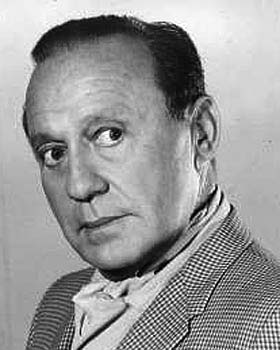
The framing as humor allows Obama to say something serious. The look at the end? Think Jack Benny
Friday, April 24, 2015
More from Andy Lacis
Andy Lacis comments on Judith Curry's visit to the hall of mirrors at And Then There is Physics, but in the spirit of the think, allow Eli to repost.
-----------------------------
Let me toss on here what I posted on ClimateEtc in regard to the recent (April 15, 2015) Science, Space, and Technology Committee Congressional Hearing:
As was to be expected, Congressional hearings are more about political posturing rather than being a directed effort of objective information gathering. Naturally, there was the perfunctory public posturing of pretending to appear “fair and balanced”. But the unmistakable overall flavor was really one of there-we-g0-again legalistic tribunes where selected legal briefs are presented on behalf of well-known staked-out positions by convenient plaintiffs who get to argue the virtues of their special points of view on their favorite issues regarding global warming and global climate change.
What went missing in this Congressional climate forum was any kind of real balancing testimony from experts in the field who have spent decades to analyze this important topic of global climate change. Regrettably, there was no real discussion as to what we actually do know about the global warming problem, and why we know it.
But, looking on the brighter side, perhaps there may have been a small modicum of progress having been made in that the likes of Senator James Inhofe (R, Oklahoma) and Congressman Dana Rohrabacher (R, California) were not out there lambasting global warming and climate change as being the greatest hoax ever perpetrated on humanity. It appears that perhaps at this point in time, making such blatant denials of reality could be perceived as being unnecessarily clueless and ignorant.
But then there is also the contrary example of courageous conviction, and understanding of the global warming reality, exhibited by former Congressman Bob Inglis (R, South Carolina), who paid the price for being politically incorrect. One can only hope that at some point, pragmatic sanity will eventually prevail.
Even some of the staunchest of the global warming doubters have now grudgingly come around to acknowledge that CO2 does indeed absorb thermal radiation (but they want to claim that the absorption is small, that CO2 is saturated, and that water vapor actually absorbs more strongly); that while there might have been some increase in global temperature (it all has been mostly due to natural variability, and as such, it has been beneficial); and that while humans might have contributed to the rise in atmospheric CO2 (it has not been significant, and besides, the plants have benefitted from more CO2).
While there was nothing that was specifically erroneous in these Congressional Hearing presentations, it was the usual problem of half-truths, misdirection, and non-sequiturs being used to paint a picture that is not an accurate description of where we stand in our understanding of the current climate situation.
Part of the problem may also be attributable to the flexible nature of some basic definitions. What exactly is meant by this common term “global warming”? Literally, the term “global warming” would signify that the global-mean temperature is rising, and if the global-mean temperature were to be decreasing, the situation would then become “global cooling”. But this frequently used term has also acquired a more technical meaning as it is being used in climate science. As the key cause and principal component of global warming, it is the rise in atmospheric CO2 and other greenhouse gases that act to increase the strength of the terrestrial greenhouse effect, and induce more water vapor in the atmosphere as a feedback effect. This inevitably leads to an increase in global surface temperature. This is really what the term “global warming” represents.
But there are other factors that also affect the global temperature. These can be caused by changes in solar irradiance, volcanic aerosols, and the natural variability of the ocean. Changes in solar irradiance and volcanic aerosols are typically known accurately enough. It is the variability of the ocean that is the principal source of uncertainly, such as a strong negative branch of the PDO cycle that can keep the global temperature from rising while atmospheric CO2 continues to increase unabated.
It is important to remember that the present-day changes affecting the global climate consist of two basic components: (1) the ongoing global warming component fueled by increasing atmospheric CO2, and (2) the natural variability of the climate system that consists of random-looking fluctuations about a slowly evolving zero reference point of the climate system.
It would be a misdirection to suggest that global warming has just somehow stalled simply because there has been only a little rise in global surface temperature since the prominent peak in 1998. There was no comparable “pause” in the rate of atmospheric CO2 increase during this time period. Instead, the global energy imbalance of the Earth increased as the heat energy that would have been warming the ground surface was being diverted toward heating the ocean. This puts more unrealized global warming into the “pipeline”, from which it will be emerging as the PDO cycle shifts toward its positive phase.
The natural variability of the climate system also makes it difficult to infer climate sensitivity to the radiative forcing by atmospheric CO2. Reliable estimates of the equilibrium climate sensitivity (equivalent to about 3 K for doubled CO2) are obtained from the geological record and from climate model calculations. The transient climate sensitivity is by definition a moving target since it depends on the rate of change of heat transport into the ocean (which itself is a changing factor), and estimating the transient climate sensitivity from observational data is particularly difficult (and uncertain), because it is necessary to know all contributing forcings in order to disentangle the feedback contributions from the total climate system response. While the CO2 forcing may be known accurately, it is big uncertainty as to the “virtual” forcings due to the natural variability of the ocean that are the most difficult to determine. Thus, estimates of the transient climate sensitivity (whether high, or low), will continue to remain highly uncertain.
In view of the above, the suggestion that climate models are running “too hot” compared to observations is disingenuous. Climate models may well run “cold” while simulating El Nino events, and run “hot” while simulating the global temperature during a strong negative PDO. Both climate models and the real world exhibit a form of unforced natural variability. And in both cases, this natural variability is quasi-chaotic, with no real way to coordinate the phasing of this variability. Any short-term comparisons between climate model results and observations need to keep this in mind. To sidestep this problem, the time period for comparisons must be long enough for the natural variability contributions to average out.
Granted, the definition of “dangerous” climate change is ambiguous. And there is probably no real way to quantify just what “dangerous” actually represents. Perhaps the example of the Titanic may help.
At what point did the situation on the Titanic become dangerous? There was no perceived danger when the Titanic left Southampton for New York. Most of the passengers were still dry and alive some two hours after hitting the iceberg. Did the danger begin when the iceberg was spotted, but there was not enough time to avoid the collision? Or was the danger already brewing when Captain Smith ignored reports of icebergs and continued full steam ahead? There might be some relevant parallels to draw.
Global-mean winds, global-mean temperatures, and global-mean precipitation, compared between a doubled CO2 climate and the current climate would not appear to be consequentially different. But it is the extreme weather events that cause the damage. Whether humans get blamed, or not blamed, neither adds nor detracts from the problem. Global warming puts more heat, water vapor, and latent energy into the atmosphere. And that is the fuel that makes the extreme weather events more extreme. So, there actually is a real relationship to be had between global warming (human induced) and a growing danger of more severe weather extremes. A better studied quantification of this relationship would certainly be very useful.
It would seem more appropriate to assign “wickedness” to problems that are more specifically related to witches. The climate problem, while clearly complex and complicated, is not incomprehensible. Current climate models do a very credible job in simulating current climate variability and seasonal changes. Present-day weather models make credible weather forecasts – and there is a close relationship. Most of the cutting edge current climate modeling research is aimed at understanding the physics of ocean circulation and the natural variability of the climate system that this generates. While this may be the principal source of uncertainty in predicting regional climate change and weather extreme events, this uncertainty in modeling the climate system’s natural variability is clearly separate and unrelated to the radiative energy balance physics that characterize the global warming problem. The appropriate uncertainty that exists in one area of climate modeling doe not automatically translate to all other components of the climate system.
Besides, the persistent uncertainties regarding the natural variability of the climate system are not the real problem that we face. The real problem is the continued increase in atmospheric CO2 that is causing the ongoing global warming. And, the basic facts and physics for understanding this aspect of global warming are all well established and well understood.
There always seem to be temptations to minimize the consequences of the global warming problem, or the cost-effectiveness of proposed efforts taken or suggested to counteract the global warming problem. That is just what Steven Koonin attempted to do in a previous post, nor does it appear to be different in this Congressional hearing.
Typically, the economic costs of taking action to address the global warming problem are always cited as being unnecessarily excessive. This was true of the proposed expenditure of hundreds of millions of dollars to upgrade the levees and shoreline in New Orleans prior to Katrina, and in New York prior to Sandy. Had this money actually been spent to make New York and New Orleans more hurricane-proof, we might never have known that hundreds of billions worth of hurricane damage might have been averted.
The economic cost of combating global warming is likely to be many hundreds of billions of dollars. But has anybody tried to calculate how many trillions of dollars it would cost to relocate Miami, New York, Washington DC, and New Orleans to higher ground? Surely, there are bound to be many other economic costs to tally up, brought on by the inaction to counteract the impending consequences that global warming is sure to bring.
Clearly, decisions will need to be made, and they will need to be made sooner rather than later. Is there anybody in Congress who is capable of making the hard decisions? It is actually important to first fully understand the problem before deciding to act, or in justifying the decision not to act.
Thursday, April 23, 2015
March gave us the warmest 12 months in a row. And the warmest 13 months, 14 months...20 months...40 months...59 months...
...but not the warmest 60 months in a row, so climate change is a hoax. The warmest 60 months in a row happened in ancient history, from March 2010 through February 2015. OTOH, the warmest 61 months in a row did just happen in March, as well 62 months, 63 months, 70 months, and on for quite a while.
The point is that as you look at longer periods, it becomes even more obvious that we're still warming. Denialists made a lot of hay out of the fact that 2014 was the warmest calendar year based on probability, with a lesser-but-still real possibility that another year was actually warmer. They die by the probabilistic sword though if you look at longer periods. There's virtually no chance that any period in the instrumental record longer than 18 months happened before 2014.
Anyway, I thought this is another way to communicate the idea (that temps are warming).
In other news, my careful reading of Tamino's recent blogging frenzy pulled out these two gems from Ted Cruz. In January, Tamino quotes Cruz saying (presumably in 2014):
The last 15 years, there has been no recorded warming. Contrary to all the theories that — that they are expounding, there should have been warming over the last 15 years. It hasn’t happened.
In March, Tamino says Cruz says:
Many of the alarmists on global warming, they’ve got a problem because the science doesn’t back them up. In particular, satellite data demonstrate for the last 17 years, there’s been zero warming.”
Goalpost much? Someone should ask Ted why he's changed his tune, other than fine-tuning his cherrypicking to the only dataset he can still use.
One disadvantage for him in being a presidential candidate is that it becomes a little harder to duck questions.
Tuesday, April 21, 2015
Eli and the Merry Elves
Some time ago, Eli and his merry elves put together a lengthy comment on an even more lengthy paper (aka piece of trash) by Gerhard Gerlich and Ralf Tscheuschner, that being a paper so bad that it really was not worth the work, except the work the merry elves did was a piece of play.
Now the Rabett is quite happy with the project. It was maybe the first published blog generated reply to such nonsense (thus the grandfather of the 97% paper), and even happier about those who took part, some of whom blog, some of whom tweet and blog to this day, Chris Ho-Stuart, Chris Colose, Joel Shore, Arthur Smith and Joerg Zimmerman.
A major part of the comment was showing that absorbing layer models of the atmosphere lead to a warmer surface, in perfect agreement with the second law of thermodynamics. What happens, of course, is that each absorbing layer re-emits IR radiation, a part of which is absorbed by the layer below. This slows the rate at which the lower level cools by radiation. If the lowest level is heated by an outside source (such as the sun) and an equilibrium is established so that the energy into the system matches that of radiation from the system, then the temperature of the lowest level at equilibrium is higher than it would be in the absence of absorbing layers.
Of course, this did not meet with understanding amongst the lard heads, and Eli ran into it again recently on Bishop Hill. Curiously Chris Colose has been thinking about the problem too and has a couple of recent posts on the subject.
Eli's introduction to thermal radiation shielding was building very high temperature ovens (> 1200K) with multiple levels of radiation shielding during his graduate research, so, on an experimental level the answer was clear, but today while searching the net he came across a book on radiative transfer by Robert Siegel which considers the problem in detail starting with parallel piles of heat shielding layers which emit diffusely (e.g. the same in all directions)

in really complete detail. The model includes different emissivities for the inside and outside walls of each shielding level. Eli is not going to go full SoD on the bunnies, but those interested can find a detailed derivation of the heat flow per unit area between two parallel plates in just about any book on thermal transfer, or you can corner John Abraham at the next AGU. When a steady state is established the amount of heat flowing per unit area through each level q must be the same
 (1)
Following Siegel, if we add these equations up, the right hand side is σ(T14-T24). Dividing by the co-factor of q on the left hand side yields
 (2)
Heat transfer books usually stop there, because the MEs are interested in how to design shielding for thermal or cryogenic applications.
OTOH, Rabett and friends were looking at the case of a planet where the amount of incoming energy from the Sun or the star of your choice is q. The emissivity of the surface is going to be something like 0.95, that of the atmosphere at different levels, well that depends on the pressure, concentration and spectra of greenhouse gases, and, of course the specific humidity and where the clouds are. For CO2 the contribution is going to be between 0.19 and 0.12. For water vapor higher, as high as water vapor goes before condensing out
However, we can gain insight by setting ε1 equal to 1 and letting all of the other levels have the same emissivity, both inside and outside each shielding level. In that case
 (3)
At a steady state, the same amount of energy has to be radiated to space. If there are no shielding levels, the amount of heat radiated per unit time is σT1o4. Consider the case where there is only the outermost heat shield (N=0) then
 (4)
Canceling σ, multiplying both sides by 1/ε2 and bringing T1o4 to left hand side we get
 (5)
All terms on the left hand side are positive, ε2 is less than or equal to 1, therefore T1, the temperature where there is one heat shielding level is greater than T1o, the temperature of the surface if there is no blocking.
If there are N equivalent heat shielding layers between the innermost and outmost layers, then similarly
 (6)
The added term on the left hand side is again positive (if εs =1 then it is simply equal to N. If εs < 1 then (2/εs -1) > 1. In either case, especially the latter, T1 > T1o . The same can be done for spherical geometries, but one has to consider geometric factors, the ratios of the areas of the various shells to each other.

Siegel and other heat transfer books do the derivation.
How important are the geometric factors? They scale as An/Ao where A=4πR2 so at the risk of offending the punctilious the ratio is (Rn/Ro)2 The radius of the earth is 6371 km. Using a 10 km high atmosphere basically the troposphere, or at least the effective level which radiates to space in the CO2 bands, (Rn/Ro)2 = (6381/6371)2 = 1.003, so there will be a .3% difference from treating the system as a nest of sphere's or a series of parallel plates. Close enough.
Friday, April 17, 2015
Veep candidates bring a 0-5% increase in party vote in their home state
Got into a conversation about this yesterday: how much help does a vice-presidential candidate provide in winning that candidate's home state? I vaguely recall that poli science says not much. I went and noodled around wiki and can now draw my own dramatic conclusion: not much.
Wiki has all presidential results by state and year (e.g., here's Texas 1988) so it's simple to compare results before and after a state resident ran for vice president. In the last 30 years, not much happened, although 1992 and 1996 are hard to use because of a strong third party showing. I'd say everyone brought in much less than a 5% bump, with only Bentsen and (sadly) Palin coming in at or slightly above that level.
This small of a bump suggests that veep candidates shouldn't be chosen based on the help they provide in their home state.
OTOH, there's Florida - that's a very big swing state, and a 2% bump could be useful. I've thought a joint ticket of Jeb Bush and Marco Rubio could make winning Florida very difficult for Democrats. I believe Jeb isn't particularly popular in Florida and Rubio is only moderately popular, but people do tend to root for the home team.
Thursday, April 16, 2015
Under what circumstance does McConnell's message to foreigners to do less on climate change help America rhetorical question?
Slate has a good article on Republican politicians siding with America's foreign rivals when Democrats run the executive branch, multiple times throughout the years.
The latest version of this is Mitch McConnell's advice to foreign countries that "Considering that two-thirds of the U.S. federal government hasn’t even signed off on the Clean Power Plan and 13 states have already pledged to fight it, our international partners should proceed with caution before entering into a binding, unattainable deal." Ignore for the moment that these international commitments are voluntary, not binding. There is no circumstance under which this statement serves an American interest.
The Republican mantra has been the US shouldn't move forward without the cooperation of other countries:
Now McConnell is trying to stop that cooperation.
What's even screwier is that even if you think the American interest isn't in cooperating, but rather that the US should take a free rider position and let other countries do most of the work of combating climate emissions, then McConnell's statement to foreigners is still a bad idea. Trying to get them not to do the work just makes things worse for us.
Maybe one could take the position that climate change is a hoax, therefore there's no need to do anything at all, but McConnell has apparently used the "I'm not a scientist" incantation, and doesn't claim it's all a hoax:
If you don't know it's a hoax, then you should take feasible opportunities to help, or at least do nothing to interfere with other countries' efforts.
That second clip is partly revealing though when McConnell says a Kentucky senator's job is to fight for coal jobs in his state. What he really means is to fight for coal industry profits - if he were fighting for jobs, he'd have used his power to slow down the mechanization of the industry responsible for the vast majority of the lost coal jobs.
So what he's saying is his job is to fight for coal industry profits and not for the American interest in the world. That's what he's doing with his advice to foreign countries.
UPDATE: credit where due, Jeb Bush surpasses the low bar set by his party and acknowledges reality of climate change (while not saying what he'd do as President).
Monday, April 13, 2015
A Train Wreck Avoided

“We have taken great care throughout this process, including focusing on consensus building that has resulted in a solid, science-based statement,” said William Barletta, POPA chair. “We now look forward to hearing from the Society’s membership.”Those bunnies who have not been following what only a rabett of good will could describe as the rope-a-dope stylings of the APS Panel on Public Affairs, may need to do some reviewing, but the clatter of falling teeth filled the arena as Barletta described the workshop that Steven Koonin put together to educate the drafting panel he had carefully packed.
As part of the process, the Review Subcommittee convened a workshop on Jan. 8, 2014, with six climate experts. “We used this meeting to delve deeply into aspects of the IPCC consensus view of the physical basis of climate science,” said Barletta. “The Review Subcommittee’s goal was to illuminate for itself, for the APS membership, and for the broader public both the certainties and boundaries of the current climate science understanding.”Anyhow, after wiser heads got in front of the moving train, the following statement emerged
On Climate Change: Earth’s changing climate is a critical issue that poses the risk of significant disruption around the globe. While natural sources of climate variability are significant, multiple lines of evidence indicate that human influences have had an increasingly dominant effect on the climate warming observed since the mid-twentieth century. Although the magnitudes of future effects are uncertain, human influences on the climate are growing. The potential consequences of climate change are great and the policies of the next few decades will determine human influences on the climate for centuries.
On Climate Science: As summarized in the 2013 report of the Intergovernmental Panel on Climate Change (IPCC), there continues to be significant progress in climate science. In particular, the connection between rising concentrations of atmospheric greenhouse gases and the increased warming of the global climate system is more certain than ever. Nevertheless, as recognized by Working Group 1 of the IPCC, scientific challenges remain to our abilities to observe, interpret, and project climate changes. To better inform societal choices, the APS urges sustained research in climate science.
On Climate Action: The APS reiterates its 2007 call to support actions that will reduce the emissions, and ultimately the concentration, of greenhouse gases, as well as increase the resilience of society to a changing climate. Because physics and its techniques are fundamental elements of climate science, the APS further urges physicists to collaborate with colleagues across disciplines in climate research and to contribute to the public dialogue.Eli, not being at all shy, although frequently ignored (Cassandra was too, and that had a cost), submitted the following
My criticism of the draft statement is the lack of urgency. Given that damage to the climate through emission of greenhouse gases accumulates and remains, this is a serious omission and I would strongly recommend inserting the second paragraph of the previous statement at the end of the current draft
The evidence is incontrovertible: Global warming is occurring. If no mitigating actions are taken, significant disruptions in the Earth’s physical and ecological systems, social systems, security and human health are likely to occur. We must reduce emissions of greenhouse gases beginning now.The evidence that the damage will persist for centuries is inherent in every model of the carbon cycle from the simplest to the most complex, and dealt with by the IPCC WG1 reports. The reason why urgency is needed at every point is explained by Stephen Gardiner in a Perfect Moral Storm
the presence of the problem of moral corruption reveals another sense in which climate change may be a perfect moral storm. This is that its complexity may turn out to be perfectly convenient for us, the current generation, and indeed for each successor generation as it comes to occupy our position. For one thing, it provides each generation with the cover under which it can seem to be taking the issue seriously – by negotiating weak and largely substanceless global accords, for example, and then heralding them as great achievements – when really it is simply exploiting its temporal position. For another, all of this can occur without the exploitative generation actually having to acknowledge that this is what it is doing. By avoiding overtly selfish behaviour, earlier generations can take advantage of the future without the unpleasantness of admitting it – either to others, or, perhaps more importantly, to itself.In addition, I have comments on the process. When APS schedules a policy statement it should ensure that the membership of POPA for that year includes several that have expertise and are respected in that area. What happened in the case of the Earth's Changing Climate statement was seriously embarrassing to the Society and totally avoidable.
In the case of the Earth's Changing Climate statement, the chair of the drafting subcommittee was a serious mistake as, to be generous, his naivety about the physics of climate mislead both him and the drafting subcommittee. Those doubting this would do well to read and exchange between Isaac Held and the committee from the experts's interview and a reply to the drafting subcommittee's chair from Andrew Lacis, a leading climate scientist
Second, it was disappointing to see that the panel selected to teach the drafting committee about Climate Change consisted of three mainstream experts and three outliers (Christy, Lindzen and Curry). There are also those who are existentially frightened by what they see as the threat of climate change . They were not represented, nor am I saying they should necessarily be in equal number, but I do say that the Panglossian outliers should also have not been involved. There is a professional consensus in this area and if the drafting committee would need lessons (which it should not) then extremists can only mislead non-experts
Eli has heard from others with slightly different takes. It is certain that the draft statement is considerably stronger than the originally proposed one. That is welcome. Eli and friends had awaited a train wreck. If one is recommending how to proceed when the need for dealing with the threats of climate change are acknowledged, the draft statement's emphasis on global warming as risk management can be rigorously defended.
However, as readers of Rabett Run know, the threat of climate change has NOT been acknowledged by a blocking minority and IEHO, a call to urgent action is still needed to get through their opposition.
It is important that the draft statement emphasizes the considerable human role in warming, the likelihood it will get worse in the future, and the serious risks involved. It also emphasizes the importance of reducing emissions.
On the other hand, the bunnies and the bunny clutchers know that there are elements of the APS membership who will fight to weaken the statement, and even a slight
retreat from the strength of the statement as currently written would be
an unacceptable loss.
Given that, at a minimum it is important for the membership to get
behind the statement and back it. Shoving the Overton Window in the direction of strengthening the draft statement will help offset the voices that will no doubt
cry out for eviscerating it and, if loud enough, might even succeed.
Postscript: As Hank says in the comments below:
Postscript: As Hank says in the comments below:
I think in hindsight the APS will appear, well, to be physicists doing their usual thing, standing on the tracks and squinting into the light wondering why it's getting brighter faster and faster.
Saturday, April 11, 2015
EV costs at a tipping point for un-American countries
Un-American developed countries, that is. See here:

Bloomberg reprinted the above graph from a 2011 McKinsey report, and I added the green line for where we are today. Bloomberg adds the info that we weren't supposed to hit $300 until 2020 and that the market leaders are already there.
Bloomberg goes on to note the obvious fall in gas prices so that currently, all EVs are less competitive than they were in 2011. A person buying a car today might think twice though about whether gas prices are going to remain low.
What I thought missing from the discussion is the existence of developed countries not named United States of America, because of a little thing called the gas tax. In most of them, the price is over $4.50 (and also in many developed countries that don't produce oil). Forget the US - for the rest of the world, the tipping point is here.
Sadly though, I'm not aware of EV purchases in the rest of the world matching this prediction. Part of it could be that Nissan Leafs and Teslas simply aren't cheap for other reasons, and they need more development and more competition to knock down prices. The other and more depressing factor is that people aren't economically rational and may discount the future savings from not buying gas more than they should. Or just not be able to finance.
Overall though it's good news, and it should be interesting to watch overseas EV sales in the next few years.
UPDATE: some good comments worth checking out. One point was that in countries with high gas taxes the electricity is also often expensive. I'd agree, but I doubt it come close to making up the difference.
Another point was about electric bikes - if you put them on the chart above, I think they'd win under any circumstances, and they'll do even better as batteries improve. Developing world countries are building and rebuilding their cities and towns on a much more massive rate than developed nations, and they have a real opportunity to center personal transportation around electric bikes, not cars.
Support Continental Movement
Russell worries that no bunny cares about continental drift. He needs to get out more

Bunnies can join the foundation at Paleoartisans (T shirts too)
Friday, April 10, 2015
Man bites dog
I've argued for a while that we should make use of analogizing sports statistics with climate/weather data, and Media Matters shows it happening (the analogy starts about a minute into the video).
Difference here being that it's a sports journalist using climate change to explain sports, saying a single piece of contradictory data doesn't refute an overall trend. Just as a single cold day doesn't refute climate change, a single exciting basketball game doesn't refute a bad system for administering basketball.
I think it's a good thing though - reinforcing climate change as a culturally-accepted fact.
Thursday, April 09, 2015
Identifying specific people in the Philippines who were killed by climate change
We know people have been killed by climate change. That's true both in the broader sense that every single weather event we experience is different from a parallel Earth that didn't go through decades of human GHG emissions, and more specifically that some killer weather has been made worse in general (e.g., heat waves). What's been difficult to say is whether a specific killer event is randomly-caused as opposed to being exacerbated by climate change (although maybe not always impossible). And even when you can definitively say a specific killer heat wave was made worse, it would be hard to say who was killed by the "natural" level of the heat and who was killed by the anthropogenic increase in severity.
Enter sea level rise.
SLR is the one thing that's different from weather - if an effect can be traced to sea level rise, it can be traced to climate change. In the case of mass casualties from tropical storms, this should be possible to figure out.
Haiyan/Yolanda's effects on the Philippines is the best example so far, although there doubtless will be more. Six thousand people were killed, with the storm surge considered the deadliest effect. Worst-hit areas had storm surges of 13 to 17 feet, with many people drowning in an evacuation center where the lower floors were submerged.
In most of the world, the present SLR is only a few inches, making it harder to attribute damage from sea level rise as opposed to the natural level of storm surge. Philippines is different, with three to four times the amount of sea level rise as the global average, making the surge about a foot higher than it would have been.
My assumption is that deaths attributable to Yolanda storm surge decreases with elevation, and that above a certain level, the amount of surge wasn't enough to collapse structures (people would have died above that elevation, but from other causes). The storm surge deaths in the foot of elevation below that certain level were caused by sea level rise and by climate change, and that foot of elevation change can be a pretty wide swath of flat land. Maybe someone can go and find who those people were.
Not all the storm deaths within that band would've been caused by the surge, but deaths from collapsing structures seem to be pretty likely candidates. Many people lower down would've also been killed by sea level rise, or others higher up killed by other climate change effects on the storm, but they're hard to identify. What I'm trying to show here is the faces of people we could say with a fair degree of certainty were killed by climate change.
And if no one gets to figure this out with respect to what happened in the Philippines, then there's always next time.
Andy Lacis Writes to Steve Koonin
At Climate Etc, Andy Lacis has had it (in a polite sort of way) and writes in the comments to Steve Koonin an admonition to stop being silly. Eli thought this important enough to post by itself, as many will not wade through the muck to get to it.
----------------------------
Steven,
Physicists should take the time to understand their physics better.
Only 1% to 2% . . . that may sound small and insignificant . . . but it isn’t.
It is well known that the normal human body temperature is about 310 K. Furthermore, it is also well known that a seemingly small change (up or down) in absolute body temperature by only 1% (3.1 K, or 5.6 F) would make one sicker than a dog, and, that a 2% change in body temperature (up or down by 6.2 K, or 11.2 F) will virtually guarantee a dead body. From this, it should be sufficiently clear that, when viewed in absolute energy terms, the viable margin between life and death in the Earth’s biosphere is remarkably narrow – so much so that a seemingly insignificant 1% to 2% change in the total energy of the global environment will invariably result in serious disruption of the established infrastructure of life in the biosphere.
There is no substitute for appealing directly to basic physics for physical insight and better understanding of the ongoing global warming problem. And I do recall one particular case in the 1970s (in which you might have participated) when the JASON group of physicists was tasked to weigh in on the then open question of radiative forcing due to doubled CO2. At that point in time, the JASONs had available the computational resources to calculate one of the earliest line-by-line radiative forcing determinations for doubled CO2. They found the downward flux change at the ground surface to be less than 1 W/m2, from which they erroneously concluded that the radiative forcing caused by the doubling of atmospheric CO2 was “not all that significant”.
While the JASON group’s radiative calculations were numerically on target, the JASONs were clearly mistaken in their interpretation of the calculated results. Radiative forcing takes place over the entire atmosphere, and not just at the ground surface. If they had to select a single point on the vertical profile that best describes the radiative forcing by CO2, they should have selected the tropopause point, where the instantaneous flux change due to doubled CO2 is nearly 5 W/m2 for a clear-sky atmosphere. Moreover, the JASONs did not take into account the additional radiative magnification that is invariably contributed by the longwave opacity from water vapor and cloud feedbacks, which are several times larger than the radiative forcing due to CO2 alone, and therefore should have been included in their analysis.
In simple terms, the basic essence of the global warming problem is best understood as a straightforward problem in global energy conservation, as was first noted by Joseph Fourier in 1824. Specifically, the global-mean surface temperature of the Earth is about 288 K, which implies that the Planck emission from the ground surface must be about 390 W/m2. Furthermore, the global-mean solar energy absorbed by the Earth is observed to be about 240 W/m2 (with about 100 W/m2 reflected directly back to space).
Given that the Earth should be in near-global energy balance, this implies that the Earth must radiate about 240 W/m2 of longwave energy out to space (as has also been verified by satellite measurements). Absent the greenhouse effect, the 240 W/m2 of absorbed solar energy can only support a surface temperature of 255 K. This “missing energy” circumstance led Joseph Fourier to conclude that there must be thermal heat energy radiated downward from the atmosphere to supply the additional heating of the ground surface.
The flux difference of 150 W/m2 between the 390 W/m2 emitted by the ground surface and the 240 W/m2 of LW flux going out to space at the top of the atmosphere is a direct measure of the strength of the terrestrial greenhouse effect. Greenhouse action builds up the surface-emitted flux to 390 W/m2 and creates the ensuing reduction by 150 W/m2 of the outgoing longwave flux to space – all accomplished by radiative energy transfer means (via sequential emission, absorption, and re-emission interactions).
Physicists should also appreciate the nature of the Clausius-Clapeyron relation, and the fact that it is exponential in temperature. Undisturbed, with a source of liquid water, the atmosphere is always striving to reach an equilibrium 100% relative humidity. In simple terms this means that the holding capacity of the atmosphere for water vapor doubles for every 10 K increase in atmospheric temperature. And, there is no doubt that water vapor is a very potent greenhouse gas.
Detailed radiative attribution calculations show explicitly that water vapor accounts for about 50% of the 150 W/m2 of greenhouse effect, and that longwave cloud opacity accounts for 25%. Both of these radiative effects are due to the climate system’s fast feedback processes. The remaining 25% of the greenhouse effect comes from the radiative forcings by the non-condensing greenhouse gases (which incidentally also act to sustain the terrestrial greenhouse effect at its present strength). Of the non-condensing greenhouse gas contributions, CO2 is by far the strongest contributor accounting for about 20% of the 150 W/m2 greenhouse effect, with the remaining 5% due to minor GHGs like CH4, N2O, O3, and CFCs.
A key point to keep in mind is that it is these non-condensing greenhouse gases that act as the principal radiative forcing agents of the climate system. Because of their thermodynamic, chemical, and radiative properties, CO2 and the minor GHGs are chemically slow-reacting with atmospheric lifetimes ranging from decades to many centuries. Once they are injected into the atmosphere these gases effectively remain there indefinitely by not condensing or precipitating at prevailing atmospheric temperatures as they continue to exert their radiative forcing.
Since CO2 is the strongest and most effective of these non-condensing radiative forcing gases, it then follows that CO2 can be identified as the principal LW control knob that governs the global climate of Earth. The fact is that the other forms of radiative climate forcing (e.g., changes in solar irradiance, surface albedo, and aerosol forcing) are small by comparison. This makes the case for recognizing CO2 as the principal climate control knob that much more compelling.
Atmospheric water vapor, on the other hand, has the role of principal fast feedback process in the climate system by condensing and precipitating from the atmosphere in response to changes in local meteorological conditions (constrained by the exponential temperature dependence of the Clausius-Clapeyron relation), meaning that the atmospheric distribution of water vapor (and clouds) can change rapidly on a time scale of hours and days in response to changing weather conditions.
Applied radiative forcings that heat (or cool) the atmosphere cause more (or less) water vapor to evaporate, which generates more (or less) longwave opacity, which then contributes more (or less) radiative greenhouse effect. Such changes in water vapor cause big changes in radiative heating or cooling, but the changes are limited in magnitude by how much change the water vapor undergoes in reaching its new equilibrium distribution.
Because of this, water vapor and clouds act to magnify the initial radiative perturbation, but cannot on their own initiative manufacture or impose a warming or cooling trend on global climate, even though they contribute more strongly to the atmospheric radiative structure than the radiative forcing gases that actually drive and control the global temperature trend.
The physics cause-and-effect nature of the global warming problem is not all that complicated. The basic “cause” component of global warming has been clearly identified and understood for many decades, and has been accurately quantified by precise measurements of atmospheric CO2 (e.g., the Keeling curve).
This is fully corroborated by the latest annual data report of fossil fuel extraction that now approaches 10 gigatons of carbon/yr (roughly equivalent to 10 cubic km of coal/yr, which when burned, adds about 5 ppm CO2 to the atmosphere, half of which remains there for many centuries). The radiative effects of CO2 are fully known from well-established understanding of greenhouse gas radiative properties and radiative transfer modeling of the atmospheric structure.
How can a physicist not comprehend that it is atmospheric CO2 that is the principal radiative forcing agent for the ongoing global warming? . . . and not be concerned that water vapor, as the climate system’s principal feedback agent, has an exponential dependence on temperature?
To be sure, there are other factors that contribute to climate change. But decades of measurements and analysis have shown that variations in solar irradiance, land use, aerosols, ozone, and other minor greenhouse gases, while making a contribution, are small by comparison to CO2.
Of greater interest is the “unforced” variability of the climate system on decadal time scales that arises from changes in ocean circulation patterns that are effectively un-influenced by changes in atmospheric radiative forcing. The deep ocean is a very large cold storage reservoir. An upwelling blob of cold ocean water can put a “pause” in the ongoing global warming, temporarily diverting the greenhouse “heat” to warming the ocean. But once that cold blob of ocean water has been warmed up to its equilibrium temperature, it is back to the business of continued global warming. And also note that the ocean cannot cause a decadal warming spurt – the deep ocean is colder than the surface biosphere, so it cannot be a source of heat.
Significantly, the key climate system components (water vapor, clouds, ocean) are not configured to respond to radiative and/or temperature perturbations on a sufficiently small enough incremental scale that would permit a monotonic approach to global energy balance equilibrium. Instead, there is always over-reaction such as when water vapor condenses en mass to produce storms, coupled with the similarly over-reactive responses by atmospheric and ocean dynamics to pressure-temperature and salinity differences, to produce the quasi-chaotic weather and the longer-term climate noise that characterizes the climate system.
Physicists should not be confused by these random-looking quasi-chaotic fluctuations about the local climate equilibrium point, and should instead focus more on the changing energy balance equilibrium point of the climate system. They should also pay attention to the geological record that points to an atmospheric CO2 level of 450 ppm as being incompatible with polar ice caps, a level that is expected to be reached by the end of this century. While it may take a thousand years for the polar ice to melt, the future course is being prepared for a 70 meter rise in sea level.
Beneath Contempt
Steve Koonin has emerged from the woodpile to defend his clowning in the APS POPA process and the Wall Street Journal on Judith Curry's blog.
Alerted by Willard and ATTP, the bunnies crossed their ears and read Koonin's lament, only to see
An even simpler indication of the percentish influence is to note that a 3 C mean global surface temperature increase on a base of 288 K is also about a 1% effect.This is beneath contempt. Without greenhouse gases the surface of the earth would be near 255 K on a simple calculation known to all, and indeed, ~255 K is the measured temperature of the Moon's surface. Arthur Smith had a complete discussion of this on arXiv a while ago. Eli would not be surprised to see such a lights out statement from Willard Tony or the good Biship, indeed it would be a step up in the usual. However, by rumor, while it is true that the temperature of the surface would go to 3K or so if the sun did blow out, that is not scheduled
But it is all of a piece. Let the Bunnies look at Dr. Koonin's take on forcing from CO2, which, of course is logarithmic.
An alternative way of seeing the physical smallness of anthropogenic influences is to look at how the long-wave absorptivity of the clear sky increases with CO2 concentration – this is the physical input to GCMs that varies directly. Figure 4 from Harde shows that a doubling from the pre-industrial 280 ppm to 560 ppm increases the absorptivity by about 1% on a base of 82%, or, again a percentish shift. An even simpler indication of the percentish influence is to note that a 3 C mean global surface temperature increase on a base of 288 K is also about a 1% effect.

Eli had some comments about Harde, suffice it to say it doesn't rain much on Harde world, but the radiative transfer stuff is fine. However, let the bunnies take a look at that figure again. The low point for CO2 mixing ratio is about 180-200 ppm, last seen at the bottom of ice ages. It might have been a bit lower in snowball earth, but again Steve "Lights Out" Koonin wants to compare CO2 forcing for 560 ppm to CO2 forcing for 0 ppm, a condition which has never been seen in the 4 billion years or so the Earth has existed.
ADDED FOR CLARITY: So Eli thought he would help Steve Koonin on the road back to reality by drawing a line between the CO2 absorptivity under ice age conditions and today. The net effect of the rise from 200 to 280 ppm is smaller than what would be expected in doubling CO2 from 380 to 760 ppm as shown in the Harde graph (Koonin didn't read Harde/the graph correctly It shows a doubling from 380, not 280, but the answer is the same)

Wednesday, April 08, 2015
Anybunny Want to Send a Message to the APS
One of the principles of a publishing embargo is that if somebunny else breaks it, then there is no longer an embargo. About a week ago the APS sent emails to members (yes, Eli is a member) asking them for comments on the 2015 draft statement on the Earth's Climate Change, with an admonition not to forward the link on to others.
In the comments here John Garland noted
I see the draft APS statement is out for comment by members. Has anyone posted it outside the APS servers? I'd be curious what they came up with at the draft stage given the history cited here some months ago.(links added) and Eli responded
John, no doubt somebunny will, but Eli feels a bit constrained because he has been peripherally involved criticizing the APS for their naive incompetence, so he will wait. Suffice it to say that it is sufficiently plain vanilla which was inevitable given the birth pangs.Now Eli was not first to the bookies betting on who it would be, Willard Tony, one of the Brits of Denial, nonono, it was Judith Curry, and not really her, but she took her permission from one of the Reddit discussions, so here it is
On Climate Change:Earth’s changing climate is a critical issue that poses the risk of significant disruption around the globe. While natural sources of climate variability are significant, multiple lines of evidence indicate that human influences have had an increasingly dominant effect on the climate warming observed since the mid-twentieth century. Although the magnitudes of future effects are uncertain, human influences on the climate are growing. The potential consequences of climate change are great and the policies of the next few decades will determine human influences on the climate for centuries.
On Climate Science:As summarized in the 2013 report of the Intergovernmental Panel on Climate Change (IPCC), there continues to be significant progress in climate science. In particular, the connection between rising concentrations of atmospheric greenhouse gases and the increased warming of the global climate system is more certain than ever. Nevertheless, as recognized by Working Group 1 of the IPCC, scientific challenges remain to our abilities to observe, interpret, and project climate changes. To better inform societal choices, the APS urges sustained research in climate science.
On Climate Action:The APS reiterates its 2007 call to support actions that will reduce the emissions, and ultimately the concentration, of greenhouse gases, as well as increase the resilience of society to a changing climate. Because physics and its techniques are fundamental elements of climate science, the APS further urges physicists to collaborate with colleagues across disciplines in climate research and to contribute to the public dialogue.Some time ago, Eli noted that a stronger statement than the 2007 APS statement was needed, but the APS is a victim of its own kludged process (more about that later, see links above)
A stronger, more direct statement is clearly needed as the evidence for climate change is even stronger today then it was two years ago. Compare the draft statement with the 2007 one.
Emissions of greenhouse gases from human activities are changing the atmosphere in ways that affect the Earth's climate. Greenhouse gases include carbon dioxide as well as methane, nitrous oxide and other gases. They are emitted from fossil fuel combustion and a range of industrial and agricultural processes.
The evidence is incontrovertible: Global warming is occurring. If no mitigating actions are taken, significant disruptions in the Earth’s physical and ecological systems, social systems, security and human health are likely to occur. We must reduce emissions of greenhouse gases beginning now.
Because the complexity of the climate makes accurate prediction difficult, the APS urges an enhanced effort to understand the effects of human activity on the Earth’s climate, and to provide the technological options for meeting the climate challenge in the near and longer terms. The APS also urges governments, universities, national laboratories and its membership to support policies and actions that will reduce the emission of greenhouse gases.(emphasis added) It appears that the APS draft statement is actually weaker than the 2007 statement, while the evidence of our changing the climate in an awful direction has grown stronger. Indeed, the APS could have done better asking the squeegee guys on the street to lend a hand.
Subscribe to:
Posts (Atom)

 Posts